Europe has always been at the heart of humanity’s exploration of the skies. From the Renaissance, when scholars began to question ancient models of the cosmos, to the scientific revolutions of the 17th and 18th centuries, observatories played a vital role in advancing our knowledge of the universe. These historic sites were not just buildings with telescopes—they were centers of discovery, innovation, and education. Generations of astronomers, mathematicians, and physicists worked within their walls, laying the foundations for modern science.
Today, many of these observatories still stand, combining their original charm with new roles as museums, research centers, and cultural landmarks. They preserve centuries of astronomical instruments, star charts, and archives that tell the story of how humans gradually unraveled the mysteries of the cosmos. Visiting them is more than a scientific excursion; it is also a journey through history, art, and culture.
For travelers with an interest in astronomy, history, or architecture, Europe offers an unparalleled opportunity to explore these iconic observatories. From the Royal Observatory in Greenwich, where the Prime Meridian was established, to Leiden Observatory, the world’s oldest university observatory, each site has its own story to tell. Together, they form a network of landmarks that remind us of our enduring fascination with the stars.
In this article, we’ll highlight some of the most important historic observatories in Europe that you need to visit, showing why they remain essential destinations for curious minds and adventurous travelers alike.
Royal Observatory Greenwich (United Kingdom)
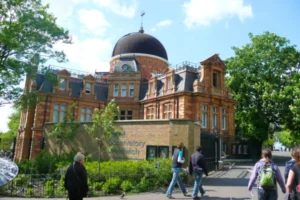
Few places in the world combine science, history, and culture as seamlessly as the Royal Observatory in Greenwich. Founded in 1675 by King Charles II, it was established to improve navigation and mapmaking—vital pursuits during the age of exploration. Over time, it became one of the most influential observatories in Europe, home to groundbreaking research in astronomy and timekeeping.
The Royal Observatory is best known as the birthplace of Greenwich Mean Time (GMT) and the location of the Prime Meridian, the line that divides the eastern and western hemispheres of the Earth. Visitors today can stand with one foot in each hemisphere, an experience both symbolic and memorable.
Inside, the observatory houses an impressive collection of historical instruments, including John Flamsteed’s original telescopes, marine chronometers, and star maps. The Peter Harrison Planetarium offers immersive shows that bring modern astronomy to life, while exhibitions trace the evolution of navigation and timekeeping.
Set within the beautiful Greenwich Park and overlooking the River Thames, the site is as scenic as it is educational. For tourists and astronomy enthusiasts alike, a visit to Greenwich is not just about looking at the stars—it’s about stepping into a place where science shaped global history.
Paris Observatory (France)
The Paris Observatory, founded in 1667, is one of the oldest astronomical institutions in the world and remains an active center of research today. Established under King Louis XIV, it was part of a grand vision to make France a leader in science and navigation. Its first director, Giovanni Cassini, used the observatory to map the heavens with unprecedented accuracy, and many of his discoveries—including the division in Saturn’s rings that now bears his name—are milestones in astronomy.
The observatory has been the stage for centuries of innovation. It played a crucial role in the development of celestial mapping, planetary studies, and the measurement of Earth’s dimensions. One of its most significant contributions was participating in the project to establish a universal system of longitude, essential for global navigation.
Today, visitors can explore parts of the observatory by appointment, discovering its archives, historic instruments, and the building itself—an architectural masterpiece that reflects France’s scientific ambition during the 17th century. While it functions primarily as a research center, special events and exhibitions occasionally open the doors wider to the public.
For travelers interested in both science and history, the Paris Observatory offers a glimpse into the legacy of European astronomy at its peak. It is not just a place of discovery—it is a monument to humanity’s determination to chart the stars and understand our place in the universe.
Armagh Observatory (Northern Ireland)
Founded in 1790 by Archbishop Richard Robinson, the Armagh Observatory is one of the oldest continuously operating observatories in the British Isles. Nestled in Northern Ireland, it reflects a remarkable blend of scientific curiosity and cultural heritage. For more than two centuries, astronomers at Armagh have recorded observations that form one of the longest-running weather and astronomical archives in the world.
The observatory’s legacy includes important contributions to stellar catalogs, planetary observations, and meteorological studies. Its scientists have documented the night sky with precision, building resources that continue to be valuable for modern research. Unlike many historic observatories that ceased operations, Armagh has successfully adapted to new eras, combining its heritage with contemporary scientific projects.
Today, visitors can explore the observatory and its beautiful grounds, which include telescopes, scientific exhibits, and archives. The nearby Armagh Planetarium enhances the experience, offering immersive shows and interactive displays that make astronomy accessible to all ages. Together, they form a hub for science education and public engagement.
Armagh Observatory stands out not only for its history but also for its ability to connect past and present. For travelers, it offers a chance to experience a living scientific institution that continues to inspire wonder, curiosity, and discovery under the Irish skies.
Leiden Observatory (Netherlands)
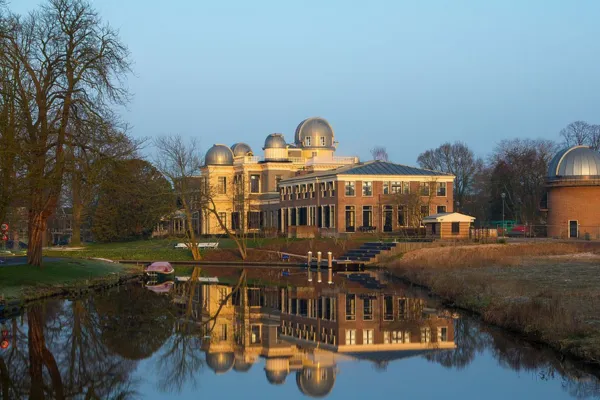
The Leiden Observatory, founded in 1633, is the oldest university observatory in the world still in operation. Situated in the Netherlands, it began as a modest tower for teaching and research but soon became one of Europe’s most important centers for astronomy.
Over the centuries, Leiden Observatory has been associated with major scientific breakthroughs. It was here that some of the first photographic star catalogs were created, and the observatory played a pivotal role in advancing astrophysics. Famous scientists, including Willem de Sitter and Hendrik Lorentz, worked at Leiden, making it a hub of both astronomy and physics.
Today, the observatory continues its academic mission as part of Leiden University, training the next generation of astronomers while preserving its historic buildings and instruments. Public tours allow visitors to explore its telescopes, archives, and exhibitions, offering a window into nearly 400 years of astronomical history.
Leiden Observatory is more than a monument; it is a living institution where tradition meets progress. For travelers, it provides a rare opportunity to step into the oldest functioning observatory on Earth, walking in the footsteps of pioneers who helped shape modern science.
Bologna Astronomical Observatory (Italy)
The Bologna Astronomical Observatory, founded in 1712, represents Italy’s long tradition of astronomical research and discovery. Originally part of the Institute of Sciences in Bologna, the observatory quickly became a center for studies in celestial mechanics, timekeeping, and planetary motion. Over the centuries, it has housed some of Europe’s finest instruments, including meridian circles and refracting telescopes, which were essential for mapping the sky with great accuracy.
One of the observatory’s most notable figures was Eustachio Manfredi, its first director, who contributed to astronomy, mathematics, and physics. His work set the foundation for Bologna’s reputation as a hub of scientific thought during the Enlightenment. The observatory’s instruments and records continue to offer insights into the evolution of astronomy over the past three centuries.
Today, the Bologna Observatory operates as both a research facility and a museum. Visitors can explore historic instruments, star charts, and archives that showcase the city’s role in European science. It also participates in modern research, maintaining its dual identity as both a cultural heritage site and an active center for astronomy.
For travelers, the observatory provides not only a journey into scientific history but also the chance to enjoy Bologna’s rich cultural and architectural landscape. A visit here offers a blend of academic tradition and Italian charm, making it an inspiring stop for those interested in astronomy’s past and present.
Strasbourg Observatory (France)
Built in the late 19th century, the Strasbourg Observatory stands as both a scientific and cultural landmark. Established in 1875 when Alsace was part of the German Empire, the observatory was designed to reflect the era’s ambition to make Strasbourg a major scientific hub. With its impressive domed architecture and surrounding gardens, the site remains one of Europe’s most picturesque observatories.
Strasbourg Observatory gained recognition for its contributions to astrophotography and star catalogs, which became valuable tools for mapping the heavens. The facility also played an important role in fostering Franco-German collaboration in science, bridging cultural and political divides through shared pursuit of knowledge.
Although it no longer operates as a cutting-edge research facility, the observatory continues to serve as a center for education and outreach. Today, it houses the University of Strasbourg’s astronomy department and offers exhibitions that highlight its history and scientific achievements.
Visitors are often drawn not only to the scientific legacy but also to the beauty of the site itself. Its elegant design and tranquil setting make it a favorite for those who appreciate both history and architecture. For astronomy enthusiasts, Strasbourg Observatory offers a unique glimpse into how 19th-century Europe embraced the stars with a spirit of curiosity and innovation.
Practical Tips for Visiting Historic Observatories
Exploring Europe’s historic observatories can be both inspiring and educational, but a bit of preparation ensures the best experience. First, check each observatory’s visitor schedule, as many function partly as research institutions and may only open to the public on specific days. Booking guided tours in advance is often recommended, especially at popular sites like Greenwich or Leiden.
When planning your trip, consider combining observatory visits with nearby cultural attractions. For example, a visit to Greenwich can be paired with the National Maritime Museum, while Bologna’s observatory can be explored alongside the city’s medieval architecture. This makes your journey not only scientific but also cultural.
Bring comfortable shoes and allow extra time, since many observatories are located within parks, gardens, or historic campuses. Photography is usually permitted in museums and exhibition halls but may be restricted near delicate instruments—so always follow staff instructions.
Lastly, approach your visit with curiosity. These observatories are more than tourist stops; they are living reminders of humanity’s quest to understand the cosmos. Respect the spaces, ask questions during tours, and take time to reflect on how these historic sites continue to inspire new generations.
Conclusion
Historic observatories are more than buildings with telescopes—they are monuments to human curiosity, perseverance, and discovery. Throughout Europe, these institutions played a vital role in shaping our understanding of the universe. From the Royal Observatory in Greenwich, where time and longitude were standardized, to the Paris and Leiden Observatories, which advanced celestial mapping and astrophysics, each site represents a chapter in the story of science.
Visiting these observatories is not only about astronomy; it is also about connecting with culture and history. Many of them preserve centuries-old instruments, star charts, and archives that show how astronomers gradually unraveled the mysteries of the sky. Walking through their halls, you are reminded that discoveries we now take for granted—planetary motion, stellar catalogs, or precise timekeeping—were once groundbreaking achievements made by dedicated scientists.
Today, these sites serve dual purposes: as research centers continuing their mission of exploration and as cultural landmarks open to the public. They inspire visitors of all ages to look upward, question the unknown, and appreciate the beauty of the cosmos. For travelers, they offer a rare chance to experience science in the places where history was written.
In a world often focused on the future, Europe’s historic observatories remind us of the importance of the past. They show how knowledge is built step by step, generation by generation. By visiting them, you become part of that journey—continuing the tradition of wonder and exploration that has guided humanity for centuries.