Chile has earned a reputation as the global capital of astronomy, and with good reason. Stretching across the Atacama Desert and the Andes Mountains, the country offers some of the most favorable conditions on the planet for stargazing and astronomical research. With clear skies more than 300 nights a year, extremely dry air, and locations at high altitudes far removed from light pollution, Chile provides an almost perfect natural laboratory for observing the universe.
This unique environment has attracted astronomers and scientists from around the world. Today, Chile hosts some of the most advanced observatories on Earth, many of them international collaborations involving leading space agencies and universities. These facilities are responsible for some of the most groundbreaking discoveries in modern astronomy, from identifying exoplanets to studying the origins of galaxies.
But Chile is not just a hub for scientists—it is also a dream destination for travelers and space enthusiasts. Visitors can tour observatories, attend stargazing programs, and witness the breathtaking beauty of the Atacama night sky. The rise of astrotourism in the region has made it easier than ever for the public to connect with the cosmos.
In this article, we’ll explore why Chile is considered a paradise for astronomy, highlight its most important observatories, and provide tips for travelers who want to experience this incredible world for themselves. Whether you are a seasoned stargazer or simply curious about the night sky, Chile offers an unforgettable journey into the universe.
Why Chile Is Ideal for Astronomy
Chile’s geography makes it one of the most extraordinary places in the world for astronomy. The Atacama Desert, often described as the driest non-polar desert on Earth, provides exceptionally clear air with almost no moisture. Combined with its high elevation, this creates skies of unparalleled transparency, where even faint celestial objects become visible.
Another advantage is the country’s isolation from major sources of light pollution. Many observatories are located far from cities, in remote desert or mountain regions, ensuring that the night sky remains pristine. In fact, the Atacama is so dark that it is frequently compared to conditions in space.
These natural factors are complemented by international investment. Organizations such as the European Southern Observatory (ESO) and the U.S. National Science Foundation have chosen Chile as the home for some of their most important facilities, including the Very Large Telescope and ALMA. The country is also preparing for the Extremely Large Telescope (ELT), which promises to be the world’s most powerful optical telescope.
For both scientists and travelers, Chile’s unique conditions mean that visiting is not just about stargazing—it is about experiencing some of the clearest windows into the universe available on Earth.
Paranal Observatory
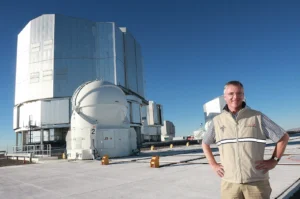
Paranal Observatory is one of Chile’s crown jewels in the world of astronomy. Located in the heart of the Atacama Desert, at an altitude of 8,600 feet (2,635 meters), it is home to the European Southern Observatory’s Very Large Telescope (VLT)—one of the most advanced optical instruments ever built. The VLT consists of four massive Unit Telescopes, each with a mirror 8.2 meters in diameter, and four smaller Auxiliary Telescopes that work together to create the effect of a giant telescope.
Paranal has played a central role in modern astronomy, contributing to discoveries about exoplanets, black holes, and distant galaxies. Its scientific output places it among the most productive observatories in the world. The clarity of the desert skies, combined with cutting-edge technology, allows researchers to capture some of the sharpest images of the universe ever taken from Earth.
For visitors, Paranal offers a fascinating glimpse into the frontier of science. Guided tours are available on weekends, where guests can explore the telescope facilities, learn about the observatory’s discoveries, and experience the surreal desert landscape that surrounds it. The site is so otherworldly that it has even served as a filming location for movies, including James Bond’s Quantum of Solace.
Paranal Observatory is more than a research center—it is a symbol of human ingenuity and collaboration. For travelers passionate about space, it provides a rare opportunity to step inside one of the most important astronomical facilities on the planet.
La Silla Observatory
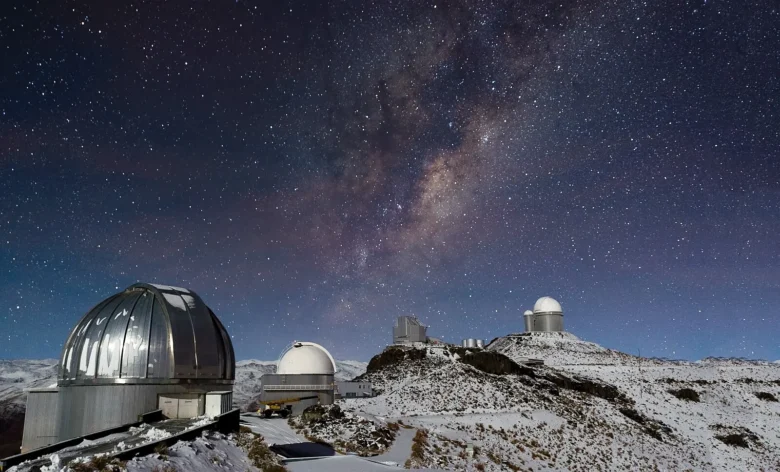
Before Paranal and ALMA, there was La Silla Observatory, the European Southern Observatory’s first site in Chile. Established in the 1960s, La Silla set the stage for Chile’s rise as a global leader in astronomy. Located at 7,900 feet (2,400 meters) in the Atacama Desert, La Silla offers remarkably clear skies, making it a prime location for astronomical research.
La Silla is home to several powerful telescopes, including the 3.6-meter ESO Telescope, which has been instrumental in the discovery of hundreds of exoplanets. The observatory has also contributed to advances in the study of supernovae, star formation, and the large-scale structure of the universe. Its achievements continue to shape our understanding of the cosmos.
For visitors, La Silla offers guided tours on specific dates, giving the public a chance to explore its domes, learn about the instruments, and see how professional astronomers work. While less famous than Paranal, La Silla holds a special place in astronomy history as the observatory that marked ESO’s first steps in Chile.
What makes La Silla especially appealing is its blend of history and science. Travelers not only enjoy spectacular desert skies but also walk through a site that represents the beginning of Chile’s astronomical journey. For those interested in the roots of modern astronomy, La Silla is a must-visit destination.
ALMA (Atacama Large Millimeter/submillimeter Array)
The Atacama Large Millimeter/submillimeter Array (ALMA) is one of the most ambitious and powerful astronomical projects ever built. Located on the Chajnantor Plateau at an altitude of 16,500 feet (5,000 meters), ALMA operates in one of the driest and highest regions of the Atacama Desert. These extreme conditions are ideal for radio astronomy, as the dry air allows for exceptionally clear signals from space.
Unlike traditional observatories with one large telescope, ALMA consists of 66 high-precision antennas that work together as an interferometer. This setup enables astronomers to study the universe in millimeter and submillimeter wavelengths, revealing details invisible to optical telescopes. With ALMA, scientists have made groundbreaking discoveries about star formation, protoplanetary disks, and the chemistry of distant galaxies.
For visitors, ALMA offers a unique experience through its Operations Support Facility, located at a lower altitude near San Pedro de Atacama. Here, guided tours introduce the project’s mission, showcase one of the antennas up close, and explain how this international collaboration—spanning Europe, North America, East Asia, and Chile—has reshaped modern astronomy.
Although the high-altitude site itself is off-limits due to health risks, the visitor center provides an unforgettable introduction to one of humanity’s most advanced scientific tools. ALMA embodies the spirit of global cooperation and scientific curiosity, making it an essential stop for those exploring Chile’s astronomical wonders.
Other Notable Chilean Observatories
In addition to Paranal, La Silla, and ALMA, Chile is home to several other world-class observatories that highlight its role as a paradise for astronomy. Among them is the Cerro Tololo Inter-American Observatory (CTIO), located in the Andes near La Serena. CTIO has played a key role in mapping the southern sky and studying dark energy through major surveys like the Dark Energy Survey (DES).
Another important site is the Las Campanas Observatory, which houses the twin Magellan Telescopes. These instruments have been used to study galaxies, star clusters, and exoplanets with exceptional clarity. Las Campanas is also the planned site for the Giant Magellan Telescope (GMT), one of the next-generation mega-telescopes that will rival ESO’s Extremely Large Telescope.
Speaking of the future, Chile is preparing for the Extremely Large Telescope (ELT), currently under construction on Cerro Armazones near Paranal. Once completed, it will be the largest optical/infrared telescope in the world, capable of directly imaging exoplanets and probing the earliest phases of galaxy formation.
For travelers, while not all of these facilities are open for public tours, many offer outreach programs or collaborations with astrotourism operators. Together, they reinforce Chile’s position as the global hub of astronomy, combining cutting-edge research with opportunities for public engagement.
Astrotourism in Chile
While Chile’s observatories are primarily dedicated to scientific research, they have also inspired a flourishing astrotourism industry. The Atacama Desert, with its otherworldly landscapes and some of the clearest skies on the planet, has become a magnet for travelers eager to combine adventure with stargazing. Local operators offer night tours where visitors can use medium-sized telescopes, learn to identify constellations, and even practice astrophotography under pristine skies.
San Pedro de Atacama, in particular, has established itself as the capital of Chilean astrotourism. Here, countless agencies run guided stargazing experiences that cater to both beginners and seasoned enthusiasts. Many of these tours also incorporate cultural elements, blending traditional Andean cosmology with modern astronomy. This combination creates a deeper appreciation of the sky—not only as a scientific object of study but also as a source of cultural meaning.
Beyond the Atacama, regions such as Elqui Valley are also renowned for their astrotourism offerings. The valley’s microclimate provides exceptionally stable skies, making it ideal for both professional observatories and public stargazing lodges. Resorts and hotels often include observatories on-site, giving guests the chance to look at the stars just steps from their rooms.
Astrotourism has become a significant contributor to Chile’s economy, drawing visitors from around the world and encouraging sustainable practices to preserve the skies. For travelers, it offers a rare opportunity: to experience astronomy not as a distant science, but as an immersive, personal journey under some of the most spectacular skies on Earth.
Practical Tips for Visiting
If you’re planning a trip to Chile’s observatories, preparation will make your experience far more rewarding. First, check availability in advance—many facilities, such as Paranal and La Silla, only open for public tours on specific days and require reservations. It’s also important to consider timing: the dry season (April to October) generally provides the best conditions for stargazing.
Because many observatories are at high altitudes, pack warm clothing, even if you’re visiting in summer. Nights in the desert and mountains can be very cold. Comfortable shoes, sunscreen for daytime excursions, and a reusable water bottle are also essentials. For stargazing tours, a red flashlight is highly recommended to preserve night vision.
When visiting observatories, always respect the rules. Avoid using bright lights or flash photography, and follow guides’ instructions when near sensitive equipment. Remember, these sites are not only tourist attractions but also cutting-edge research centers.
Conclusion
Chile has rightly earned its title as the paradise of world astronomy. From the immense power of ALMA and the VLT at Paranal to the historic legacy of La Silla and the promise of future mega-telescopes, the country is at the forefront of humanity’s exploration of the universe. Combined with a vibrant astrotourism industry, Chile offers both scientists and travelers an unmatched opportunity to connect with the cosmos.
Visiting Chile’s observatories is not just about looking at stars—it is about experiencing the meeting point of science, culture, and natural beauty. For anyone with a passion for the universe, Chile is more than a destination; it is a journey into the heart of the cosmos itself.