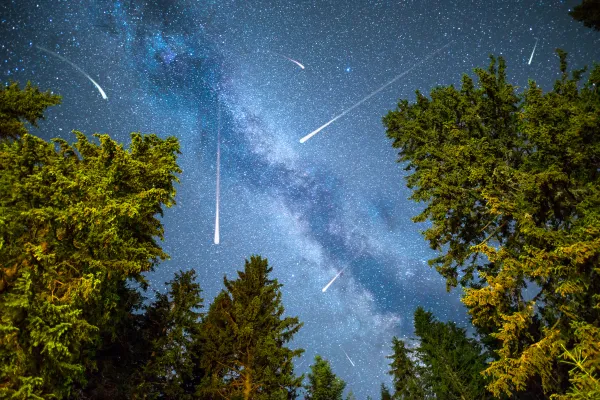
Few natural spectacles are as breathtaking as a meteor shower. Unlike fireworks, which are man-made, meteor showers are celestial events that remind us of our planet’s connection to the wider universe. They occur when Earth passes through streams of debris left behind by comets or asteroids, causing fragments to burn up in the atmosphere and create bright streaks of light across the night sky. Some showers, such as the Perseids in August or the Geminids in December, are so reliable and intense that they attract skywatchers from every corner of the globe.
But not all locations are equal when it comes to viewing these dazzling events. Clear skies, high altitude, minimal humidity, and—most importantly—freedom from light pollution can dramatically enhance the experience. That is why travelers and astronomy enthusiasts often seek out the world’s best dark-sky destinations for meteor watching.
From deserts and volcanic peaks to islands and national parks, certain places provide a perfect combination of climate and visibility. They not only offer optimal conditions but also create stunning backdrops, making the experience even more memorable. In this article, we’ll explore the top global destinations for watching meteor showers, each offering its own unique perspective on this universal phenomenon.
Atacama Desert (Chile)
Known as one of the driest and clearest places on Earth, the Atacama Desert in northern Chile is a dream location for stargazers and meteor enthusiasts. Its high altitude, dry air, and near-zero light pollution create some of the best sky conditions found anywhere. On peak meteor shower nights, such as the Perseids in August or the Geminids in December, the Atacama sky can reveal hundreds of meteors streaking across the Milky Way.
The desert is also home to some of the world’s most advanced observatories, including ALMA and Paranal, which attract scientists from around the globe. For visitors, local astrotourism companies offer guided night tours, often combining telescope observations with meteor watching in remote desert locations.
Beyond astronomy, the Atacama offers surreal landscapes—salt flats, geysers, and red-rock valleys—that make stargazing an even more profound experience. Watching meteors shoot across a sky so vivid that you can see the Milky Way with the naked eye is unforgettable.
For those seeking the ultimate meteor shower experience, the Atacama Desert provides not only world-class conditions but also a sense of wonder that comes from being in one of Earth’s most unique environments.
Mauna Kea (Hawaii, USA)
Rising nearly 14,000 feet above sea level, Mauna Kea on Hawaii’s Big Island is one of the most extraordinary stargazing sites in the world. Its summit sits above much of Earth’s atmosphere, providing exceptionally clear skies with minimal atmospheric distortion. This makes it an ideal location not just for astronomers, but also for travelers hoping to catch spectacular meteor showers like the Quadrantids in January or the Perseids in August.
Mauna Kea is home to an array of powerful telescopes, many operated by international collaborations. While access to the summit is restricted due to safety and cultural concerns—it is a sacred site for Native Hawaiians—visitors can still enjoy incredible stargazing from the Mauna Kea Visitor Information Station at 9,200 feet. Here, night programs often include guided star talks, cultural insights, and opportunities to view celestial objects through smaller telescopes.
During a meteor shower, the altitude and isolation of Mauna Kea allow viewers to see meteors in astonishing numbers, often with long, bright trails. The experience is made even more memorable by the crisp air and the dramatic volcanic landscapes surrounding the mountain.
Combining science, culture, and natural beauty, Mauna Kea offers a once-in-a-lifetime setting to watch the sky come alive with meteors.
Namib Desert (Namibia)
The Namib Desert, stretching along Namibia’s Atlantic coast, is one of the oldest and most pristine deserts on Earth. With its vast open spaces, dry air, and almost no artificial light, it offers some of the darkest skies in the southern hemisphere. During major meteor showers such as the Perseids or the Geminids, the Namib provides unparalleled views of meteors streaking across a brilliantly star-studded sky.
The desert’s remoteness is one of its greatest assets. With virtually no nearby cities, light pollution is almost nonexistent, allowing the Milky Way to shine in astonishing detail. Many lodges and camps in the region now cater to astrotourism, offering guided night walks and outdoor beds where guests can fall asleep under a blanket of stars.
For travelers, the experience of watching meteors here is about more than the sky. The Namib’s surreal landscapes—towering dunes, salt pans, and rugged mountains—create an awe-inspiring backdrop. Meteors flashing across the horizon feel even more dramatic when framed against this ancient desert.
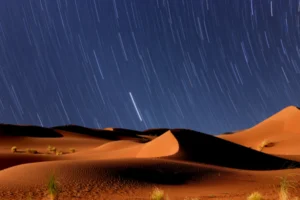
Photographers will also find the Namib ideal for capturing long-exposure shots of meteor trails, with its iconic red dunes and starry skies combining for unforgettable images.
For those seeking a truly remote and immersive cosmic experience, the Namib Desert offers one of the most magical places on Earth to witness a meteor shower.
Joshua Tree National Park (California, USA)
Located just a few hours from Los Angeles, Joshua Tree National Park is one of the most accessible yet spectacular destinations for stargazing in the United States. Recognized as an International Dark Sky Park, it provides a dramatic escape from city lights, making it a favorite spot for the Perseid meteor shower each August.
Joshua Tree’s desert setting creates ideal conditions: clear skies, dry air, and wide horizons. Popular stargazing sites include Hidden Valley and Cottonwood Campground, where visitors can spread out blankets and watch dozens of meteors per hour on peak nights. The park’s signature Joshua trees, with their twisted shapes, add an otherworldly foreground to the celestial show—making it a haven for photographers.
Each year, the park hosts a Night Sky Festival, bringing together scientists, amateur astronomers, and the public for telescope viewings, constellation tours, and educational talks. During meteor showers, this event becomes even more memorable, blending community and discovery.
Because it is relatively close to major urban areas, Joshua Tree is especially appealing for those who want a quick escape into the cosmos. Lying beneath the desert sky, with meteors streaking overhead and the Milky Way glowing brightly, is a reminder of just how vast and beautiful the universe truly is.
Canary Islands (Spain)
The Canary Islands, located off the northwest coast of Africa, are among Europe’s premier destinations for astronomy. Thanks to their high-altitude volcanic peaks, clear skies, and strong protections against light pollution, the islands—especially Tenerife and La Palma—are ideal for watching meteor showers like the Perseids in August and the Geminids in December.
La Palma is home to the Roque de los Muchachos Observatory, one of the world’s leading astronomical sites, which sits above the clouds at over 7,800 feet. While professional telescopes aren’t open for public use, visitors can enjoy guided tours, cultural programs, and access to stargazing viewpoints nearby. The island is also recognized as a Starlight Reserve, ensuring exceptional conditions for dark-sky tourism.
Tenerife, the largest island, offers similar opportunities. The slopes of Mount Teide, Spain’s highest peak, provide breathtaking locations to watch meteors flash across the night sky. Many tour operators organize astronomy excursions that combine cultural storytelling with telescope use, making the experience educational as well as spectacular.
The Canary Islands’ combination of natural beauty, world-class observatories, and a vibrant astrotourism infrastructure makes them a top global choice for meteor enthusiasts. Whether on a remote mountain trail or at a dedicated observation site, the islands guarantee unforgettable views of the universe in motion.
Uluru (Australia)
In the heart of Australia, the iconic sandstone monolith Uluru offers one of the most atmospheric stargazing experiences in the southern hemisphere. Located far from major cities, Uluru sits beneath some of the darkest skies in Australia, making it an incredible location for meteor showers such as the Eta Aquariids in May and the Geminids in December.
The cultural significance of Uluru adds depth to the experience. For the Anangu people, the area is sacred, and their traditional stories often intertwine with the stars. Some astronomy tours in the region incorporate Indigenous perspectives, offering visitors both scientific and cultural insights into the night sky.
During meteor showers, the desert setting provides wide-open horizons, ensuring that meteors can be spotted from every direction. The contrast between the glowing trails of meteors and the silhouette of Uluru itself creates unforgettable visuals, especially for photographers.
Visitors can join guided stargazing sessions, where telescopes reveal planets and deep-sky objects alongside the natural meteor show. Alternatively, simply lying back on the desert floor and watching meteors streak overhead offers an equally magical experience.
Uluru combines natural wonder, cultural richness, and pristine skies, making it one of the most unique places on Earth to watch meteor showers.
Iceland
Few places on Earth offer the combination of natural spectacle that Iceland does. Known for its waterfalls, glaciers, and volcanic landscapes, Iceland is also a superb destination for stargazing and meteor watching. With much of the island free from urban light pollution, the skies are dark and expansive—perfect for showers like the Orionids in October or the Geminids in December.
What makes Iceland especially unique is the possibility of witnessing two celestial shows at once: a meteor shower and the northern lights. While auroras can sometimes outshine faint meteors, the combination creates a surreal experience—green and purple ribbons dancing across the sky as shooting stars blaze through them.
Remote areas such as the Westfjords, the Highlands, and the Snæfellsnes Peninsula are particularly good for stargazing, offering wide horizons and minimal interference. During peak meteor nights, it’s possible to see dozens of meteors per hour, especially after midnight when Earth rotates directly into the debris stream.
Because of Iceland’s unpredictable weather, flexibility is essential. Clear nights can be rare in winter, but when conditions align, the spectacle is breathtaking. For adventurous travelers, Iceland transforms a meteor shower into a full natural performance unlike anywhere else in the world.
Practical Tips for Meteor Shower Viewing
Watching a meteor shower can be unforgettable, but preparation makes all the difference between an average night and an extraordinary one. First, timing is crucial. Check the peak dates of major meteor showers like the Perseids, Geminids, or Eta Aquariids, and plan your trip around them. The best viewing hours are typically after midnight until just before dawn, when Earth is facing directly into the stream of debris.
The moon phase also matters. A bright full moon can wash out fainter meteors, so aim for nights near a new moon for maximum visibility. Clear skies are essential, so always consult local weather forecasts. If you’re traveling, give yourself a few nights of flexibility in case of clouds.
Comfort is another key element. Bring a reclining chair or blanket, since meteor watching requires lying back and scanning wide portions of the sky. Dress warmly—even in deserts or tropical areas, temperatures can drop significantly at night. A red flashlight is invaluable, letting you move around without disrupting your night vision.
Patience is equally important. Unlike fireworks, meteors don’t follow a predictable schedule. Settle in, allow your eyes at least 20 minutes to adjust to the dark, and enjoy the natural rhythm of the night sky.
Finally, respect the environment. If you’re in a national park, follow rules to protect wildlife and leave no trace. By preparing thoughtfully, you’ll not only maximize your chances of seeing meteors but also fully immerse yourself in the serenity and beauty of the cosmic show.
Conclusion
Meteor showers are among the most accessible and awe-inspiring celestial events, visible to anyone willing to look up at the right time and place. Yet, the experience is vastly enriched when witnessed from some of the world’s best stargazing destinations. From the arid clarity of the Atacama Desert and the high-altitude peaks of Mauna Kea to the remote expanses of the Namib Desert and the volcanic landscapes of Iceland, each location offers its own unique backdrop to nature’s light show.
These destinations are more than just vantage points—they are gateways to reconnect with the universe. Lying under a truly dark sky, far from city lights, reminds us of both our smallness and our connection to the cosmos. Whether framed by the red dunes of Namibia, the hoodoos of Bryce Canyon, or the silhouette of Uluru, meteors gain a context that makes them unforgettable.
Meteor showers also serve as reminders of our shared humanity. No matter where you stand on Earth, looking up at streaks of light across the heavens is an experience that transcends culture and geography. It connects us to ancient skywatchers who marveled at the same phenomena thousands of years ago.
So, the next time a meteor shower approaches, consider making it more than just a quick glance from your backyard. Plan a journey to one of these top global destinations, settle under the stars, and witness one of the most beautiful natural performances our planet has to offer.