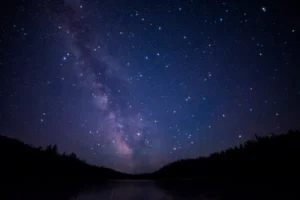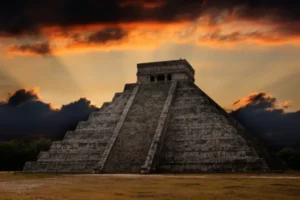
From the moment humans first looked up at the night sky, the universe has been more than a collection of stars and planets. It has been a stage for imagination, a source of mystery, and a mirror for our deepest emotions. The cosmos, vast and unreachable, has always fascinated us precisely because it is both eternal and unknown. Artists across cultures and centuries have tried to capture that feeling, translating the immensity of space into colors, sounds, words, and moving images.
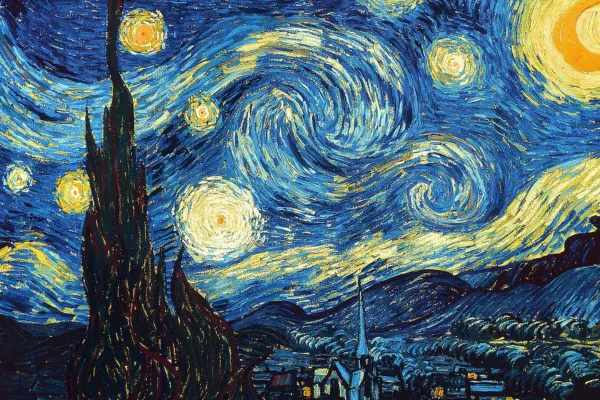
In the visual arts, painters have long been drawn to the drama of the heavens. Ancient cave markings may depict constellations, while Renaissance artists merged astronomy with theology, creating works that celebrated divine harmony. Later, modern painters like Vincent van Gogh turned the night sky into emotional landscapes, swirling with turbulence and wonder. For them, the stars were not just points of light but symbols of longing, eternity, and beauty.
Music, too, has echoed with cosmic rhythms. From the mystical “music of the spheres” imagined by Greek philosophers to Gustav Holst’s orchestral suite The Planets, composers sought to capture the grandeur of celestial motion. In the 20th century, jazz visionaries, psychedelic rock bands, and electronic pioneers reimagined space as soundscapes of freedom, exploration, and infinite possibility.
Cinema brought the cosmos to life in a new dimension. Early films like A Trip to the Moon transformed fantasy into spectacle, while modern classics such as 2001: A Space Odyssey and Interstellar blended scientific accuracy with philosophical depth. Through cinema, the universe became not only a frontier for exploration but also a metaphor for human destiny, love, and survival.
The enduring presence of the cosmos in art shows that we do not simply observe the universe—we respond to it. Each brushstroke, melody, and frame reflects our desire to make sense of the infinite. In this article, we will explore how paintings, music, and films have drawn inspiration from the universe, turning the silent expanse of space into one of humanity’s greatest creative muses.
The Cosmos in Visual Arts
Visual art was one of the first mediums where humanity expressed its fascination with the sky. Some of the oldest known cave paintings may depict constellations and lunar cycles, suggesting that early humans already sought to capture celestial order through symbolic images. These representations turned the heavens into stories that could be remembered and shared.
During the Renaissance, when science and art flourished together, the cosmos often appeared in religious and allegorical paintings. Artists like Raphael and Michelangelo incorporated stars and planetary motifs to emphasize divine harmony and the connection between heaven and earth. This period reflected the belief that beauty, art, and the universe were bound by the same laws of order and proportion.
In the modern era, artists shifted toward more emotional and abstract depictions. Vincent van Gogh’s Starry Night is perhaps the most iconic example, turning the night sky into a swirling, expressive vision of wonder and turbulence. Twentieth-century artists experimented with cosmic themes in new ways, from surrealist works inspired by astronomy to contemporary installations that use digital technology to recreate galaxies and nebulae inside museums.
Today, space photography itself has influenced visual art. Images from the Hubble Space Telescope, for example, have inspired countless paintings and digital works that blend science with imagination. Whether in ancient carvings or modern installations, the cosmos continues to provide artists with a limitless palette of symbols, colors, and ideas.
Music Inspired by the Universe
Music has long reflected humanity’s attempt to translate the movements of the cosmos into sound. Ancient cultures often linked chants and rhythms to celestial cycles, believing that harmony on Earth mirrored harmony in the skies. The idea of the “music of the spheres,” developed by the Greek philosopher Pythagoras, suggested that the planets moved in mathematical ratios that produced a kind of cosmic symphony. This concept deeply influenced Western thought, inspiring composers for centuries.
In the Baroque and Classical eras, musicians experimented with these ideas. Joseph Haydn’s The Creation drew directly on celestial imagery, capturing the majesty of the heavens through orchestral power. Later, Gustav Holst’s orchestral suite The Planets became one of the most celebrated cosmic works, with each movement representing the character and mythology of a different planet. Its blend of astrological symbolism and orchestral grandeur created a masterpiece that still resonates today.
The 20th century expanded the connection between music and space. Jazz musicians like Sun Ra built entire identities around cosmic themes, seeing the universe as both inspiration and metaphor for freedom. Rock and electronic musicians followed suit: Pink Floyd’s Dark Side of the Moon and David Bowie’s Space Oddity are iconic examples of space as metaphor for human experience. Electronic and ambient music also turned to the cosmos, using synthesizers to create soundscapes that evoke infinite space and interstellar journeys.
Film music cemented this relationship, with scores like John Williams’s Star Wars theme and Hans Zimmer’s Interstellar soundtrack capturing cosmic wonder for global audiences. Across genres, the cosmos continues to inspire sound, proving that music is one of the most powerful ways to make the unreachable universe feel close to the human heart.
Cinema and the Visual Cosmos
Few art forms have embraced the cosmos as fully as cinema. From its earliest days, filmmakers looked to the stars for inspiration. In 1902, Georges Méliès released A Trip to the Moon, one of the first science fiction films, which used special effects to imagine a journey into space. This pioneering work set the tone for a century of cosmic storytelling, blending fantasy, wonder, and technological innovation.
By the mid-20th century, cinema entered a golden age of space films. Stanley Kubrick’s 2001: A Space Odyssey (1968) elevated the genre, combining scientific accuracy with philosophical depth. Its iconic imagery of spacecraft against the backdrop of classical music suggested that space was not only a frontier of technology but also of human meaning. Soon after, George Lucas’s Star Wars saga turned the galaxy into a mythological stage, blending cosmic battles with archetypal storytelling that resonated across cultures.
Contemporary cinema has continued to explore the relationship between humans and the cosmos. Films like Interstellar (2014) delve into black holes, relativity, and survival while asking profound questions about love, sacrifice, and destiny. Others, like Arrival (2016), use cosmic contact as a metaphor for communication, time, and human unity. Even superhero and fantasy franchises often situate their stories in galactic settings, reflecting the enduring appeal of cosmic landscapes.
What makes cinema especially powerful in portraying the cosmos is its ability to merge sight and sound. Through visual effects, orchestral scores, and immersive storytelling, films bring the grandeur of the universe to audiences who may never see a dark sky free of light pollution. In doing so, cinema transforms the cosmos into both a stage for myth and a mirror for humanity’s deepest questions.
Shared Motifs Across the Arts
Although painting, music, literature, and cinema are very different forms of expression, when they turn to the cosmos, they often share common motifs. One of the most enduring is the star as a symbol of destiny and eternity. From Van Gogh’s Starry Night to Shakespeare’s “star-crossed lovers,” stars embody both permanence and vulnerability, reflecting the human tension between hope and fragility.
Another recurring theme is exploration. The vastness of the universe has always invited imagination, whether through Holst’s orchestral journey across the planets, Kubrick’s cinematic vision of interstellar travel, or Borges’s poetic meditations on infinity. The cosmos becomes a metaphor for human curiosity and our drive to push beyond limits—whether artistic, emotional, or scientific.
The arts also use the universe as a mirror for the unknown. Darkness, silence, and distance inspire metaphors for loneliness, longing, and mystery. Jazz musicians like Sun Ra transformed the cosmos into a symbol of liberation and possibility, while filmmakers like Christopher Nolan used black holes and relativity to explore time, love, and mortality.
What unites these depictions is the balance between science and imagination. Artists draw on astronomy’s discoveries—planets, galaxies, cosmic events—but reinterpret them through creativity. The result is not a scientific map of the universe but a cultural one, where each star or planet carries symbolic weight.
Ultimately, across all art forms, the cosmos functions as both stage and metaphor. It is a backdrop for myth and fantasy, a source of awe and fear, and a reminder of humanity’s place within something far larger than ourselves.
Conclusion
The cosmos has always been more than a physical reality—it is a wellspring of creativity that has shaped art for centuries. From the first cave paintings to contemporary films, humanity has looked upward and turned the infinite into stories, colors, sounds, and images. Every era has reinterpreted the sky, transforming it into a reflection of cultural values, emotions, and dreams.
In painting, the stars became symbols of faith, beauty, and eternity. In music, the rhythms of the heavens inspired compositions that sought to echo cosmic harmony or imagine the sounds of space itself. In literature and poetry, the universe has been a metaphor for longing, destiny, and imagination. And in cinema, the cosmos continues to dazzle with visual grandeur, offering audiences both fantasy and philosophical reflection.
What makes the universe such a powerful muse is its duality: it is both distant and universal, unreachable yet visible to everyone on Earth. This paradox gives artists an endless source of imagery and meaning. The same night sky that guided ancient civilizations still inspires songs, paintings, and films today, reminding us of continuity across time.
Ultimately, the cosmos in art is not just about the stars or galaxies themselves, but about what they awaken in us. They invite us to dream bigger, to question our place in the universe, and to find beauty in mystery. As long as people continue to create, the universe will remain one of our greatest and most timeless muses.