The United States has long been at the forefront of space exploration and astronomy, from NASA’s groundbreaking missions to some of the most advanced telescopes in the world. But you don’t need to be a scientist or astronaut to connect with the cosmos. Across the country, observatories open their doors to the public, offering opportunities to gaze at distant planets, star clusters, and galaxies while learning about the universe from experts. For space enthusiasts, visiting these sites is not just an educational outing but an inspiring journey that bridges science, culture, and imagination.
In this article, we’ll highlight the top five observatories in the United States that every astronomy lover should visit. Each one offers a unique experience, whether it’s urban stargazing in Los Angeles, exploring dark skies in Arizona, or visiting a historic site where Pluto was first discovered. From breathtaking views through giant telescopes to immersive planetarium shows and cultural programs, these observatories represent the best of what the U.S. has to offer in public astronomy. Whether you are a seasoned stargazer or just beginning your journey into the night sky, these destinations will leave you with unforgettable memories and a deeper appreciation for the universe.
Griffith Observatory (Los Angeles, California)
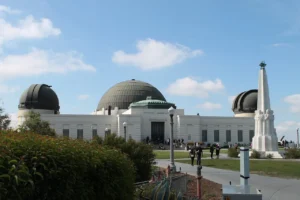
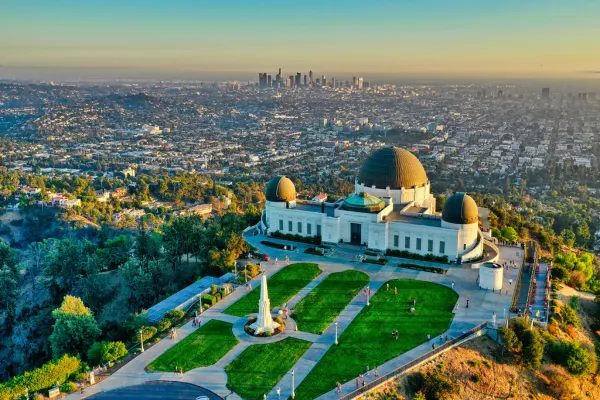
Griffith Observatory is one of the most iconic observatories in the United States—and possibly the world. Perched on the slopes of Mount Hollywood, it overlooks the sprawling city of Los Angeles and offers breathtaking views not only of the sky above but also of the city skyline and the famous Hollywood sign. Since opening in 1935, Griffith has welcomed millions of visitors, making astronomy accessible to the general public in an inspiring and memorable way.
One of its key attractions is the Zeiss 12-inch refracting telescope, which has been used by more than seven million people to view celestial objects. The observatory also features a state-of-the-art planetarium, interactive exhibits, and regular public programs designed to educate and entertain. Whether you want to explore the surface of the Moon, learn about the life cycle of stars, or understand our place in the cosmos, Griffith Observatory has something for everyone.
Beyond science, Griffith has cultural significance as well. It has appeared in numerous films, including Rebel Without a Cause and La La Land, cementing its place as a symbol of Los Angeles. Perhaps the best part? Entry is free, making it one of the most accessible gateways to the stars. For locals and tourists alike, a visit to Griffith Observatory combines science, culture, and iconic scenery, making it a must-see for any space enthusiast.
Mauna Kea Observatories (Hawaii)
High above the clouds on the Big Island of Hawaii sits one of the most extraordinary stargazing sites on Earth: Mauna Kea. At nearly 14,000 feet (4,200 meters) above sea level, the summit offers some of the clearest and darkest skies in the world. This unique environment has attracted astronomers from around the globe, and today Mauna Kea is home to an array of cutting-edge telescopes operated by international research institutions.
While access to the summit is restricted and requires special preparation due to the altitude, visitors can enjoy the Mauna Kea Visitor Information Station, located at 9,200 feet. Here, guided stargazing programs are offered using smaller telescopes, giving the public a chance to observe planets, star clusters, and nebulae with remarkable clarity. The station also provides educational talks that blend modern astronomy with Native Hawaiian cultural perspectives, highlighting the sacred significance of Mauna Kea.
For those seeking an even more immersive experience, professional tours take visitors closer to the summit, where they can witness both breathtaking sunsets and the star-filled skies that emerge afterward. With little light pollution and stable atmospheric conditions, Mauna Kea offers some of the best views of the night sky on the planet.
Whether you’re drawn by science, culture, or natural beauty, Mauna Kea is a once-in-a-lifetime destination for stargazers. It’s not just about looking through telescopes—it’s about connecting with the universe in one of the most extraordinary places on Earth.
Lowell Observatory (Flagstaff, Arizona)
Located in Flagstaff, Arizona, Lowell Observatory is one of the most historic and beloved astronomical institutions in the United States. Founded in 1894 by astronomer Percival Lowell, it quickly became a hub for groundbreaking research. The most famous discovery associated with Lowell is Pluto, which was identified here in 1930 by Clyde Tombaugh. This moment cemented the observatory’s place in scientific history and continues to inspire generations of visitors.
Today, Lowell Observatory is more than a research site—it is a vibrant center for public engagement. Visitors can explore interactive exhibits that explain astronomical concepts in approachable ways, from planetary motion to the scale of the universe. The observatory offers guided tours of its telescopes, including the historic Clark Refractor, which has been used for major discoveries and is still open for public viewing.
Evening programs are particularly popular. Under Flagstaff’s clear, dark skies—protected by some of the strictest light pollution laws in the U.S.—guests can look through modern telescopes to view planets, galaxies, and nebulae. Lowell also offers multimedia presentations and family-friendly activities that make astronomy accessible to all ages.
What makes Lowell Observatory especially appealing is its combination of history, science, and community. It bridges the past with the present, allowing visitors to experience where great discoveries were made while learning about the future of space exploration. For space enthusiasts, a visit to Lowell feels like stepping into both a museum of discovery and a living gateway to the stars.
Kitt Peak National Observatory (Arizona)
About 55 miles southwest of Tucson, Arizona, Kitt Peak National Observatory sits atop the Quinlan Mountains and boasts the largest collection of optical telescopes in the world. Established in 1958, it has become a central hub for astronomical research, with more than 20 telescopes used to study everything from the Sun to distant galaxies. Its location in the Sonoran Desert provides exceptionally clear skies, making it one of the best stargazing sites in North America.
Kitt Peak is unique because it not only serves scientists but also welcomes the public. Visitors can participate in daytime tours to learn about solar observations and the history of the observatory. At night, the experience becomes even more magical. The observatory offers programs that allow guests to look through research-grade telescopes under pristine skies. Whether you are spotting Saturn’s rings or distant galaxies, the clarity of the views is unforgettable.
Educational programs are another highlight. Kitt Peak provides lectures, workshops, and astronomy-themed events that appeal to both casual visitors and serious enthusiasts. Many visitors find the observatory’s focus on citizen science particularly inspiring, as it encourages the public to contribute to ongoing astronomical projects.
Surrounded by desert landscapes, Kitt Peak also offers breathtaking daytime views that contrast beautifully with the night skies. Combining research, education, and natural beauty, this observatory provides a comprehensive astronomy experience. For space enthusiasts, Kitt Peak is not just about looking through a telescope—it’s about participating in the larger story of exploring and understanding the universe.
Yerkes Observatory (Williams Bay, Wisconsin)
Yerkes Observatory, often called the “birthplace of modern astrophysics,” is a historic gem located in Williams Bay, Wisconsin. Built in 1897, it is renowned for housing the world’s largest refracting telescope, with a 40-inch lens that remains a marvel of engineering to this day. For decades, Yerkes was at the forefront of astronomical research, hosting famous scientists like Edwin Hubble and Carl Sagan during its long history.
Recently restored and reopened to the public, Yerkes Observatory now serves as a cultural and educational hub. Visitors can tour the beautifully preserved building, which is an architectural masterpiece blending science and art. Guided tours highlight not only the massive telescope but also the rich history of discoveries made there.
The observatory offers public programs designed to spark curiosity in all ages, from hands-on STEM activities for students to in-depth astronomy lectures for adults. Evening stargazing sessions allow visitors to use telescopes and experience the night sky just as astronomers did more than a century ago. The site also emphasizes community involvement, creating a welcoming environment that blends history, science, and culture.
For many visitors, the appeal of Yerkes goes beyond its scientific contributions. Its ornate architecture and historical significance make it a destination where the past comes alive. Standing in the grand dome and looking through the legendary refractor connects you with the legacy of astronomy while igniting inspiration for the future. For space enthusiasts, Yerkes Observatory is both a time capsule and a gateway to the stars.
Practical Tips for Visiting U.S. Observatories
A visit to an observatory is a rewarding experience, but a little preparation goes a long way in ensuring everything runs smoothly. The first tip is timing. Check the observatory’s schedule well in advance, as many offer specialized programs aligned with celestial events such as eclipses, meteor showers, or planetary alignments. New moon nights are often the best for stargazing because the darker skies reveal fainter stars and deep-sky objects.
Reservations are another key factor. Popular observatories like Griffith or Mauna Kea often require tickets to be booked weeks—or even months—in advance, especially during peak tourist seasons. Smaller observatories may have limited hours or seasonal closures, so planning ahead avoids disappointment.
What you bring also matters. Nights at high altitudes or in desert climates can be unexpectedly cold, so dressing in layers is essential. A red-light flashlight is highly recommended, as it allows you to navigate in the dark without disrupting your night vision—or that of others. Binoculars, while not necessary, can enhance your experience while waiting for telescope time. For those interested in astrophotography, confirm in advance whether cameras and tripods are permitted.
Lastly, be ready to slow down and enjoy the moment. Observing celestial objects often requires patience, as conditions vary with weather and telescope alignment. Take the time to listen to guides, ask questions, and immerse yourself in the wonder of the universe. With preparation and curiosity, your observatory visit will be both seamless and unforgettable.
Conclusion
The United States is home to some of the most remarkable observatories in the world, each offering a unique way to explore the cosmos. From the cultural icon of Griffith Observatory in Los Angeles to the pristine skies above Mauna Kea in Hawaii, and from the historic discoveries at Lowell and Yerkes to the cutting-edge research at Kitt Peak, these destinations prove that astronomy is not only about science—it’s about inspiration, culture, and human curiosity.
Each observatory brings something different to the table. Some highlight history and legendary discoveries, others showcase the most advanced telescopes of our time, and a few combine breathtaking natural landscapes with celestial wonders. Together, they provide opportunities for people of all ages to connect with the night sky, learn about the universe, and feel part of a larger cosmic story.
Visiting an observatory isn’t just about looking at stars—it’s about perspective. Standing under a sky filled with galaxies and planets reminds us of both our smallness and our significance in the grand scheme of things. Whether you are a passionate space enthusiast or simply curious about the universe, these observatories invite you to take a journey beyond the everyday.
So, add them to your travel list, prepare your red flashlight, and get ready to be amazed. Because from telescope to sky, every observatory visit is a reminder that the universe is waiting to be explored.