For centuries, human beings have looked up at the night sky with awe, curiosity, and wonder. From ancient civilizations charting the stars to modern astronomers uncovering the secrets of distant galaxies, the cosmos has always been a source of inspiration. Today, this fascination has given rise to astrotourism, a growing trend where travelers seek out the darkest skies and the most advanced observatories to experience the universe in a deeper way.
Observatories around the world are not just scientific facilities—they are cultural landmarks, architectural marvels, and gateways to the cosmos. They bring together cutting-edge technology, groundbreaking discoveries, and opportunities for ordinary people to witness the wonders of the universe with their own eyes. Whether perched high on a mountain, hidden in a desert, or preserved as historic sites in bustling cities, these observatories each offer something unique: a chance to see beyond the everyday and into the vastness of space.
What makes them so special is the way they connect people with both science and imagination. Looking through a powerful telescope to see Saturn’s rings, the craters of the Moon, or the faint glow of a nebula is an unforgettable experience. But observatories also provide much more: interactive exhibits, planetarium shows, guided tours, and a glimpse into the history of discovery. They allow visitors to step into the shoes of astronomers past and present, and to feel part of humanity’s ongoing journey to understand the universe.
In this article, we’ll explore the 10 most impressive observatories in the world to visit. Each one offers its own blend of science, history, and wonder, making them essential destinations for space enthusiasts and curious travelers alike.
Mauna Kea Observatories (Hawaii, USA)
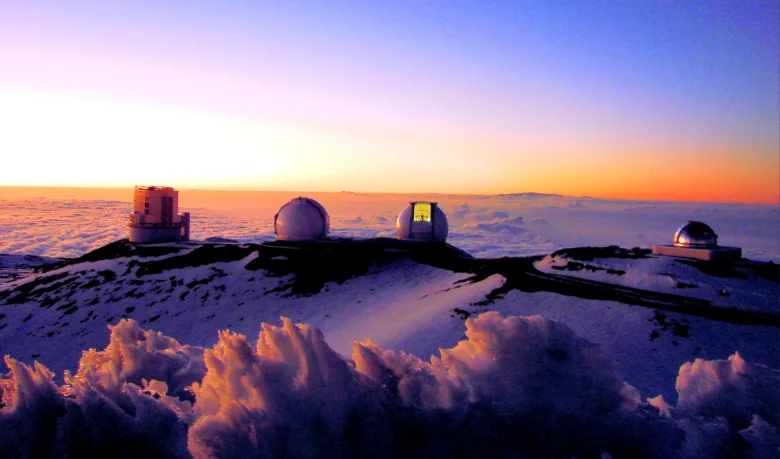
At nearly 14,000 feet above sea level, Mauna Kea in Hawaii is one of the best places on Earth for stargazing. Its summit rises above much of the atmosphere, offering incredibly clear and dark skies, free from light pollution. This makes it a prime location for some of the world’s most powerful telescopes, including those operated by international research institutions.
While the summit itself is reserved for scientists and requires special permits, visitors can enjoy the Mauna Kea Visitor Information Station at 9,200 feet. Here, guided programs allow guests to use smaller telescopes to observe planets, star clusters, and nebulae. Cultural talks highlight the mountain’s sacred significance to Native Hawaiians, adding a unique perspective that blends science and tradition.
Professional tours also offer sunset and stargazing experiences, making Mauna Kea a once-in-a-lifetime destination for travelers. With its combination of cutting-edge astronomy, breathtaking scenery, and cultural depth, Mauna Kea is unmatched in its ability to connect visitors with the universe.
Paranal Observatory (Atacama Desert, Chile)
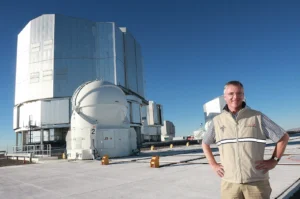
Located in Chile’s Atacama Desert, one of the driest places on Earth, Paranal Observatory is home to the European Southern Observatory’s Very Large Telescope (VLT). This cutting-edge facility sits 8,600 feet above sea level, where the air is dry and stable, providing some of the clearest skies anywhere in the world.
Paranal is famous for its groundbreaking research, from studying exoplanets to capturing detailed images of distant galaxies. While much of the observatory is dedicated to science, it also offers limited visitor tours. Guests can explore the facility, learn about its instruments, and understand how astronomers use the VLT to push the boundaries of knowledge.
The surrounding desert landscape adds to the sense of wonder. Visitors often describe the experience as stepping onto another planet. For those passionate about astronomy, a visit to Paranal is not only about looking at the stars—it’s about being at the frontier of modern science.
Roque de los Muchachos Observatory (La Palma, Canary Islands, Spain)
Perched high on the island of La Palma, the Roque de los Muchachos Observatory is one of the world’s premier sites for astronomical research. Its location above the clouds, at over 7,800 feet, ensures minimal light pollution and excellent visibility of the night sky.
The observatory houses several powerful telescopes, including the Gran Telescopio Canarias (GTC), the largest single-aperture optical telescope on Earth. This impressive instrument has been used to make important discoveries about galaxies, black holes, and the structure of the universe.
Visitors can join guided tours that provide insight into the research conducted here while also enjoying spectacular views of the island and the Atlantic Ocean. The mix of natural beauty and scientific achievement makes Roque de los Muchachos a remarkable destination. For travelers seeking both adventure and knowledge, this observatory offers an unforgettable experience at the crossroads of nature and cutting-edge astronomy.
Griffith Observatory (Los Angeles, USA)
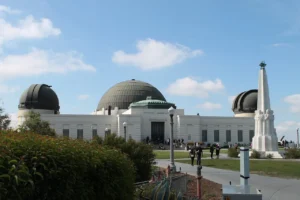
Griffith Observatory is one of the most visited observatories in the world, thanks to its location in Los Angeles and its cultural significance. Opened in 1935, it sits on the slopes of Mount Hollywood, offering panoramic views of the city skyline and the famous Hollywood sign. Beyond its stunning location, Griffith has become a hub for science education and public astronomy.
The observatory features a planetarium, engaging exhibitions, and public telescopes, including the historic Zeiss refractor. Millions of visitors have looked through this telescope to see the Moon, planets, and other celestial objects. Admission to the grounds and telescopes is free, which makes Griffith uniquely accessible compared to other observatories.
Culturally, it has appeared in numerous films, such as Rebel Without a Cause and La La Land, cementing its place as both a scientific and pop culture icon. For anyone visiting Los Angeles, Griffith Observatory offers a perfect mix of entertainment, education, and stargazing.
Arecibo Observatory (Puerto Rico) [Historic Site]
For decades, the Arecibo Observatory in Puerto Rico was one of the most famous observatories in the world. Its massive 1,000-foot radio dish, nestled into a natural sinkhole, made it the largest of its kind until 2016. Sadly, the structure collapsed in 2020, but its legacy remains significant both scientifically and culturally.
Arecibo contributed to groundbreaking discoveries, including mapping near-Earth asteroids, studying pulsars, and assisting in the search for extraterrestrial intelligence (SETI). It also entered popular culture through appearances in films like GoldenEye and Contact.
Although the giant dish no longer operates, the visitor center remains open, providing exhibitions and interactive displays about radio astronomy and the site’s history. For travelers, Arecibo still represents a place of scientific achievement and inspiration. Visiting today is less about observing the skies and more about honoring a location that once stood at the forefront of global astronomy.
Kitt Peak National Observatory (Arizona, USA)
Located in the Sonoran Desert of Arizona, Kitt Peak National Observatory boasts the largest collection of optical telescopes in the world. Established in 1958, it is home to more than 20 instruments used by researchers to study everything from the Sun to distant galaxies.
What sets Kitt Peak apart is its strong commitment to public outreach. Visitors can take daytime tours to learn about solar telescopes and the history of the facility. At night, the observatory transforms into a stargazing haven, with programs that allow guests to use telescopes and enjoy some of the darkest skies in the United States.
Educational events, lectures, and workshops make the experience engaging for both beginners and enthusiasts. The remote desert location also offers breathtaking scenery, with dramatic landscapes by day and brilliant stars by night. For travelers seeking both natural beauty and astronomical wonder, Kitt Peak provides an unforgettable experience.
La Silla Observatory (Chile)
La Silla Observatory, located in Chile’s Atacama Desert, was the European Southern Observatory’s first site in the Southern Hemisphere. Perched at an altitude of 7,900 feet, it offers exceptionally dark skies, making it one of the best places in the world for astronomy. Since the 1960s, La Silla has been at the forefront of research, hosting several powerful telescopes, including the 3.6-meter ESO telescope used in the discovery of numerous exoplanets.
Though primarily a research facility, La Silla occasionally opens its doors to the public for special tours and events. Visitors can explore the domes, learn about ongoing projects, and see how astronomers study the universe from one of the driest places on Earth.
The Atacama Desert’s landscape, with its surreal dryness and unique beauty, adds to the experience. For astronomy enthusiasts, La Silla combines scientific significance with an otherworldly setting, making it a dream destination for astrotourism.
Royal Observatory Greenwich (London, UK)
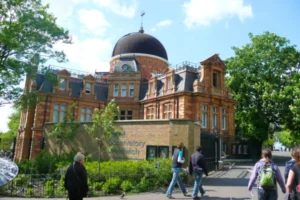
The Royal Observatory in Greenwich is one of the most historic astronomy sites in the world. Founded in 1675, it is famous as the home of the Prime Meridian—the point from which all longitude is measured—and as the birthplace of Greenwich Mean Time (GMT). This makes it not just a scientific site but also a cultural and historical landmark.
Visitors to the Royal Observatory can explore fascinating exhibits on navigation, timekeeping, and astronomy. Highlights include historic telescopes, the Great Equatorial Telescope, and the chance to stand astride the Prime Meridian line. The site also features a planetarium, offering immersive shows about the universe.
Located in London’s Greenwich Park, the observatory is highly accessible and ideal for families, students, and travelers. More than just stargazing, it offers an educational journey through centuries of science and exploration. For those interested in both history and astronomy, Greenwich is an essential stop.
South African Astronomical Observatory & SALT (Sutherland, South Africa)
In the remote town of Sutherland, South Africa, lies the South African Astronomical Observatory (SAAO), home to the Southern African Large Telescope (SALT)—the largest optical telescope in the Southern Hemisphere. SALT is a giant among observatories, enabling groundbreaking research on galaxies, stars, and cosmic phenomena invisible from the Northern Hemisphere.
SAAO offers guided tours during the day, where visitors can learn about the history of the observatory, its instruments, and its role in international astronomy. At night, special stargazing sessions allow guests to experience the pristine dark skies of the Karoo region, far from any light pollution.
The combination of world-class research and incredible sky visibility makes Sutherland a premier destination for astrotourism. For travelers, visiting SALT provides both an educational experience and the chance to see southern constellations that are not visible from northern latitudes. It’s an unforgettable adventure for anyone passionate about the stars.
Yerkes Observatory (Wisconsin, USA)
Yerkes Observatory, located in Williams Bay, Wisconsin, is often referred to as the “birthplace of modern astrophysics.” Opened in 1897, it is renowned for housing the world’s largest refracting telescope, with a 40-inch lens that remains an engineering marvel even today. Over the decades, Yerkes hosted legendary astronomers such as Edwin Hubble and Carl Sagan, cementing its place in scientific history.
After a period of closure, the observatory has recently been restored and reopened to the public. Visitors can now tour the beautiful historic building, admire its stunning architecture, and explore educational exhibits that celebrate both its past and present role in astronomy. Evening stargazing sessions also allow guests to see the night sky through telescopes, just as generations of astronomers once did.
Blending history, architecture, and science, Yerkes Observatory is more than a research site—it is a cultural treasure. For anyone fascinated by astronomy’s legacy, this observatory offers a chance to step into history while still looking toward the stars.
Practical Tips for Visiting Global Observatories
Planning a trip to an observatory requires a bit of preparation to make the most of the experience. First, always check the observatory’s schedule in advance. Many facilities require reservations, especially for night programs or special events tied to celestial phenomena like eclipses or meteor showers.
Be sure to dress appropriately. Most observatories are located at high altitudes or in remote areas, where temperatures can drop significantly after dark. Layered clothing, comfortable shoes, and a warm jacket are essential.
Bring useful tools to enhance your visit: a red flashlight to preserve night vision, binoculars for scanning the sky while waiting for telescope time, and a notebook to record your observations. If astrophotography is allowed, a camera and tripod can help capture unforgettable moments.
Finally, respect observatory etiquette. Avoid bright lights, loud noises, and handling telescopes without permission. With preparation and consideration, your visit will be comfortable, educational, and truly inspiring.
Conclusion
Observatories are more than places to study the heavens—they are destinations where science, culture, and wonder come together. From the cutting-edge telescopes of Mauna Kea and Paranal to the historic legacy of Greenwich and Yerkes, each site offers a unique perspective on humanity’s relationship with the universe.
Visiting these ten impressive observatories is not just about stargazing. It’s about experiencing the history of discovery, learning from experts, and connecting with the cosmos in ways that leave lasting impressions. Whether you’re traveling across the world to Chile’s Atacama Desert, exploring the southern skies in South Africa, or simply visiting an urban landmark like Griffith Observatory, each visit brings you closer to the stars.
Astrotourism reminds us that the universe is vast and mysterious, yet accessible when we take the time to look. Adding these observatories to your travel bucket list ensures not only memorable adventures but also moments of inspiration that extend far beyond Earth.