
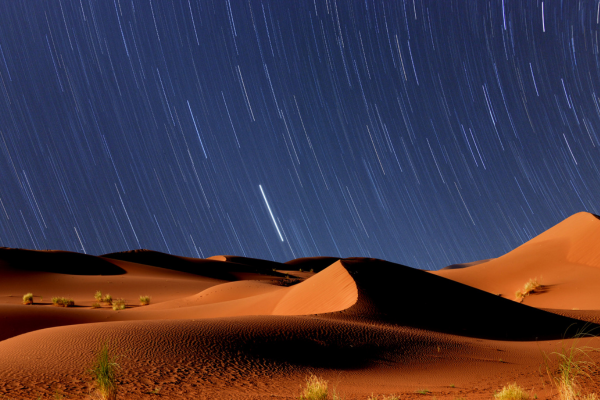
Astrotourism has become one of the most fascinating ways to travel, offering experiences that go far beyond ordinary sightseeing. Instead of focusing solely on monuments, cities, or landscapes, astrotourism invites travelers to look upward and explore the vast universe that has inspired humanity for millennia. Among the world’s most remarkable places to experience this connection with the cosmos, the Sahara Desert stands out as a destination of almost mythical proportions.
Stretching across more than nine million square kilometers and spanning multiple countries in North Africa, the Sahara is the largest hot desert on Earth. Its sheer immensity and isolation make it one of the darkest and clearest environments for observing the night sky. Far away from city lights and pollution, the desert’s dry climate and cloudless conditions allow stargazers to witness celestial displays with astonishing clarity. Constellations appear sharper, the Milky Way arches brightly across the horizon, and meteor showers streak across the heavens in dazzling performances.
But the Sahara is not only about science or astronomy—it is also about immersion. Spending the night in the desert means disconnecting from modern distractions and entering a space where silence and vastness dominate. Under the African sky, travelers often describe a sense of perspective and humility, realizing how small yet connected we are within the cosmos. The experience is not just visual, but also emotional and even spiritual.
This article explores what makes the Sahara one of the most extraordinary destinations for astrotourism. From the unparalleled clarity of its skies and the unique activities designed around stargazing, to the cultural traditions of Berber and Tuareg communities who have long navigated and lived by the stars, the Sahara offers a journey that unites nature, history, and the universe itself. It is not simply a trip—it is an immersion into the heart of the African night sky.
The Sahara Desert and Its Night Skies
The Sahara Desert, stretching across North Africa from the Atlantic Ocean to the Red Sea, is often described as a sea of sand and silence. Covering more than nine million square kilometers, it is the largest hot desert in the world and one of the most inhospitable environments for human life. Yet for astrotourists, its very harshness is what creates a spectacular opportunity: some of the clearest, darkest skies on Earth.
Light pollution is one of the biggest challenges for stargazers around the globe. In most urban and even rural areas, artificial light washes out the night sky, making only the brightest stars visible. In the Sahara, however, vast stretches of land remain untouched by modern development. The absence of artificial light, combined with the desert’s extreme dryness and frequent cloudless nights, creates perfect conditions for astronomy. Here, stars appear so sharp that even constellations familiar from other parts of the world seem brighter and more defined. The Milky Way forms a glowing arc overhead, visible in breathtaking detail, and the movements of planets can be followed easily with the naked eye.
Meteor showers in the Sahara are particularly unforgettable. With the sky unobstructed by haze or humidity, each streak of light burns vividly against the deep black canvas. Travelers often remark that the sheer number of visible stars can feel overwhelming, as if the entire universe has descended closer to Earth.
But beyond the science, the Sahara’s night skies are also about atmosphere. The silence of the desert, broken only by the wind over dunes, amplifies the experience. Surrounded by endless horizons and complete stillness, travelers often feel an intense connection with nature and the cosmos. Watching the stars from the Sahara is not just an astronomical activity—it is an immersion into one of Earth’s most primal and awe-inspiring environments.
Astrotourism Experiences in the Sahara
Traveling into the Sahara is already an adventure in itself, but when combined with astrotourism, the experience becomes transformative. The desert’s remoteness, silence, and natural beauty provide a setting where astronomy is not just observed but lived as part of a deeper journey. From traditional desert camps to camel rides under the stars, the Sahara offers visitors a wide range of ways to immerse themselves in the night sky.
One of the most iconic experiences is spending the night in a Berber or Tuareg camp. These nomadic-inspired accommodations, often nestled between dunes far from towns, allow travelers to enjoy the desert in its purest form. As evening falls, lanterns are extinguished, and the sky becomes the main source of light. Lying back on carpets or blankets, visitors can watch the constellations unfold, guided by local hosts who often share stories and legends passed down through generations.
Camel treks are another highlight. Riding across the dunes as the sun sets, travelers arrive at remote locations just in time for night to take over. The rhythmic sway of the camels, the silence of the sand, and the gradual unveiling of the stars make the journey as memorable as the destination. Once at camp, telescopes are sometimes provided, giving participants a closer look at planets, star clusters, and even distant galaxies.
Some tours also include specialized astronomy activities, led by professional guides who explain celestial phenomena while pointing out constellations and planets. Workshops on astrophotography are increasingly popular, helping visitors capture the majesty of the Sahara sky in long-exposure images. For those who prefer a more meditative approach, simple stargazing walks or moments of silence under the Milky Way provide equally powerful experiences.
In the Sahara, astrotourism is not limited to looking upward—it is a complete immersion. The combination of ancient nomadic traditions, modern astronomy, and the timeless desert environment transforms each night into an unforgettable encounter with the universe.
Culture and Spirituality
The Sahara Desert is not only a stage for dazzling astronomical displays but also a place where the human relationship with the sky is deeply rooted in culture and spirituality. For centuries, the stars have guided nomadic peoples such as the Berbers and the Tuareg, shaping their navigation, daily rhythms, and even their sense of identity. To experience astrotourism in the Sahara is to connect with this ancient wisdom, where the night sky is both a map and a source of inspiration.
Long before the invention of modern instruments, desert dwellers relied on the constellations to cross vast seas of sand. The North Star (Polaris) and other celestial markers provided orientation, ensuring survival in a landscape without clear landmarks. This practical use of astronomy gave rise to oral traditions, songs, and stories that tied the stars to the history of tribes and families. Many of these tales are still told today, often shared around campfires as visitors recline under the same skies that guided travelers centuries ago.
Spirituality also plays an important role. For nomadic cultures, the immensity of the desert and the brilliance of the night sky emphasize the smallness of humanity and the greatness of creation. This perspective fosters a deep sense of humility and reverence, values still present in desert rituals and cultural expressions. Music and poetry, often performed at night, celebrate not only the beauty of the stars but also the connection between people, nature, and the divine.
For modern travelers, participating in these traditions offers a unique layer of meaning. Stargazing becomes more than an act of science or leisure—it transforms into an experience of continuity, linking past and present, people and cosmos. In the Sahara, the stars are not only lights in the sky but symbols of guidance, resilience, and timeless wonder.
Best Time and Practical Tips
While the Sahara Desert offers extraordinary skies year-round, planning the right timing and preparing properly can make the difference between a good trip and a truly unforgettable one. The best months for astrotourism in the Sahara are generally from October to April, when the nights are cooler, clearer, and longer. Summer months, especially June through August, can be extremely hot during the day, with temperatures soaring above 45°C (113°F). Although the skies remain impressive, the heat can make travel less comfortable for many visitors.
Another factor to consider is the moon phase. For the most intense stargazing and best visibility of the Milky Way, it is recommended to visit during the new moon or when the moon is below the horizon. On full-moon nights, the desert takes on a magical glow, and the dunes appear silver under moonlight, but the brightness reduces the number of visible stars. Many travelers actually plan two nights: one under the dark sky for maximum stars, and another during a fuller moon for the beauty of illuminated landscapes.
Packing properly is essential. Despite the desert’s reputation for extreme heat, nighttime temperatures can drop sharply, especially in winter, sometimes reaching near freezing. Warm layers, a good jacket, gloves, and a hat are crucial. Comfortable walking shoes, a flashlight or headlamp with a red-light option (to preserve night vision), and plenty of water are also necessary.
Booking with experienced guides or tour companies enhances the experience, as they know the safest and most scenic locations for stargazing. Many also provide telescopes, blankets, and local storytelling to enrich the night.
Ultimately, preparation ensures comfort, but the Sahara itself guarantees the magic. With clear skies, vast horizons, and complete silence, even a single night in the desert can leave a lasting impression of cosmic wonder.
Conclusion
The Sahara Desert is more than just a geographical marvel—it is a gateway to the universe itself. For centuries, its vast horizons and star-filled skies have inspired navigation, culture, spirituality, and human imagination. Today, astrotourism in the Sahara offers modern travelers the opportunity to experience the same sense of wonder that guided nomads across the dunes and fueled legends under the night sky.
What makes the Sahara unique is the total immersion it provides. Unlike other stargazing locations where light pollution or noise intrudes, the Sahara surrounds you with silence and endless space. The absence of artificial light allows every star, planet, and constellation to shine with exceptional clarity. Here, the Milky Way does not simply appear faintly above—it stretches boldly across the sky like a cosmic river of light. Meteor showers become dazzling performances, and even familiar constellations reveal details invisible in most other parts of the world.
Yet the Sahara’s value goes beyond astronomy. It is about the cultural and human connection woven into the experience. Nights spent in Berber or Tuareg camps are enriched with music, poetry, and stories that link people to the cosmos. These traditions remind us that the stars are not only scientific objects but also cultural companions that have guided humanity for thousands of years. For many travelers, this fusion of science and storytelling deepens the sense of belonging within the universe.
Astrotourism in the Sahara is not just about seeing the stars—it is about feeling them. It is about recognizing our place in a vast cosmos while sitting on the soft sand of an ancient desert, listening to the whisper of the wind. It is an experience that lingers long after the journey ends, transforming the way we look at the sky no matter where we are in the world.
✨ The Sahara invites you not only to travel but to immerse yourself in the infinite—an African sky that has inspired, guided, and humbled humanity for millennia.
Comments
Hi, this is a comment.
To get started with moderating, editing, and deleting comments, please visit the Comments screen in the dashboard.
Commenter avatars come from Gravatar.