Astrotourism is about much more than simply looking up at the night sky—it is about traveling to places where the cosmos reveals itself in ways that transform the experience of Earth and space alike. For adventurers, the thrill lies not only in seeing the stars but in pairing that cosmic wonder with rugged landscapes, challenging journeys, and immersive encounters with nature. Few countries in the world offer this combination as powerfully as Australia.
Known for its vast outback, dramatic coastlines, and wide-open horizons, Australia is one of the best destinations on Earth for astrotourism. Its remote areas are almost completely free from light pollution, creating conditions where the Milky Way shines so brightly that it casts shadows on the ground. The southern hemisphere sky also reveals celestial wonders invisible in northern latitudes, including the Southern Cross, the Magellanic Clouds, and dense star clusters that make astrophotography a dream.
What makes Australia especially appealing to adventurers is the diversity of experiences it offers. In the outback, travelers can hike through red desert landscapes by day and camp under star-filled skies at night. On the coast, they can dive among coral reefs and then watch the Milky Way rising over the ocean. In the mountains and dark-sky parks, explorers can trek through wilderness trails before setting up telescopes in pristine solitude.
This article explores some of the most remarkable astrotourism routes in Australia—destinations and itineraries where the spirit of adventure meets the brilliance of the cosmos. From the iconic outback near Uluru to the southern skies of Tasmania, each route promises not just a trip but an unforgettable journey into the stars.
Why Australia Is a Stargazing Paradise
Australia has earned a reputation as one of the best places on Earth for stargazing, thanks to its unique geography, low population density in many regions, and access to the spectacular skies of the southern hemisphere. For adventurers seeking remote landscapes and unspoiled night skies, few countries rival what Australia has to offer.
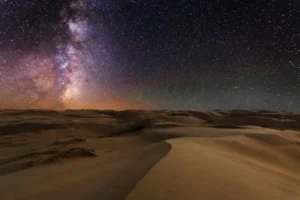
One of the greatest advantages is the visibility of celestial wonders rarely seen from the north. Travelers can easily observe the Southern Cross, which has guided explorers and navigators for centuries, along with the Magellanic Clouds, two satellite galaxies of the Milky Way that glow brightly in the southern skies. The Milky Way’s galactic core is also higher and clearer here, stretching vividly across the horizon like a cosmic river of light.
Equally important is Australia’s commitment to preserving its skies. Remote regions, such as the outback and national parks, experience almost zero light pollution. The Warrumbungle National Park in New South Wales, for example, has been recognized as Australia’s first Dark Sky Park, offering travelers and astronomers unparalleled opportunities to observe the heavens.
Australia’s climate further enhances its reputation. Many areas enjoy clear, dry nights for much of the year, particularly in desert and inland regions. Combined with wide-open horizons, this creates conditions that are nearly perfect for both naked-eye stargazing and astrophotography.
Ultimately, Australia’s appeal lies in the way it combines vast wilderness with cosmic clarity. Here, the universe doesn’t just sparkle faintly overhead—it dominates the sky, inviting travelers to step into an adventure that connects Earth’s raw beauty with the mysteries of space.
Outback Adventures and Starry Nights
For adventurers, the Australian Outback is the ultimate destination where rugged exploration meets awe-inspiring night skies. Stretching across much of the continent, the outback offers vast, empty landscapes, striking red deserts, and some of the darkest skies on the planet.
One of the most iconic locations is Uluru (Ayers Rock) in the Northern Territory. By day, this massive sandstone monolith glows with fiery colors at sunrise and sunset. By night, the skies above transform into a stargazer’s dream, with the Milky Way arching over Uluru’s silhouette. Many guided tours combine indigenous storytelling with astronomy, connecting visitors to both cultural heritage and celestial wonders.
Nearby, Alice Springs serves as a gateway to outback adventures. Travelers can embark on 4×4 journeys, long hikes, and desert camping trips, finishing each day with nights spent under skies so dark they reveal thousands of stars invisible in urban areas. Remote campsites often offer telescope sessions, where adventurers can view planets, star clusters, and even nebulae in astonishing detail.
Another highlight is the MacDonnell Ranges, with dramatic gorges and rugged trails that attract hikers and climbers. After a day of exploration, the starry skies here provide a natural theater of light, undisturbed by city glow.
For thrill-seekers, the outback combines adventure with reflection. The silence of the desert, broken only by the wind, creates the perfect atmosphere to experience the immensity of the cosmos. Stargazing in the outback is not just an activity—it’s part of the journey, turning each night into a reminder of nature’s grandeur and the universe’s infinite scale.
Dark-Sky Reserves and Protected Areas
Australia is home to some of the most ambitious dark-sky initiatives in the world, making it a haven for both amateur stargazers and seasoned astronomers. These protected areas not only preserve natural landscapes but also safeguard the brilliance of the night sky, ensuring that future generations can marvel at the stars.
The most renowned site is Warrumbungle National Park in New South Wales, which became Australia’s first Dark Sky Park in 2016. Known for its volcanic spires and rugged beauty, the park offers panoramic views of the Milky Way and countless constellations. It is also home to the Siding Spring Observatory, where travelers can explore telescopes and learn about cutting-edge astronomical research. For adventurers, combining daytime hikes with nighttime stargazing creates a truly immersive experience.
Another important destination is Mount Stromlo Observatory near Canberra. Though closer to an urban center, this site has adapted with innovative outreach programs and public stargazing events that bring astronomy to a wider audience. It demonstrates how science and tourism can work together, even near populated areas.
Remote areas of Western Australia and Queensland are also gaining recognition for their pristine skies. Communities here are actively pursuing dark-sky certifications, combining eco-tourism with astronomy to attract visitors seeking something beyond the ordinary.
These reserves prove that Australia values its cosmic heritage as much as its natural one. For adventurers, they offer the perfect balance: rugged landscapes to explore by day and skies untouched by light pollution by night. It is a reminder that the stars are as much a part of Australia’s wilderness as its deserts, reefs, and forests.
Coastal and Island Stargazing Routes
While Australia’s deserts and outback are famous for stargazing, the country’s coastal and island regions also offer unforgettable astrotourism opportunities. Here, adventurers can combine daytime ocean exploration with nights spent under star-filled skies, creating a dynamic blend of water and cosmos.
One of the highlights is Western Australia’s Coral Coast, where travelers can snorkel with whale sharks at Ningaloo Reef by day and then marvel at the Milky Way by night. The absence of large cities along this stretch of coast means minimal light pollution, allowing stars to shine brightly over the Indian Ocean. For astrophotographers, the combination of coral reefs, beaches, and cosmic backdrops is simply unbeatable.
Further south, Tasmania offers a unique twist: the chance to witness the Aurora Australis, or Southern Lights. From remote spots like Bruny Island or the Tasman Peninsula, visitors can see shimmering green and pink lights dancing across the southern horizon. Coupled with Tasmania’s pristine wilderness and dark skies, it’s one of the most magical astrotourism experiences in the southern hemisphere.
Kangaroo Island, off the coast of South Australia, blends wildlife encounters with spectacular skies. By day, adventurers can spot kangaroos, sea lions, and diverse birdlife; by night, they can gaze up at dense star fields rarely visible elsewhere. Local tours often combine nocturnal wildlife walks with astronomy sessions, giving visitors a holistic appreciation of nature.
For travelers seeking diversity, Australia’s coastal and island routes are a perfect choice. They prove that astrotourism is not confined to deserts and mountains—the sea and sky together can create equally powerful adventures under the stars.
Tips for Adventurous Astrotourists
Exploring Australia’s night skies is an unforgettable adventure, but preparation is essential for making the most of the experience. The first consideration is timing. The best stargazing occurs during the new moon or when the moon is below the horizon, ensuring darker skies. For those chasing the Milky Way’s galactic core, the ideal months are March through October, when it rises clearly in the southern hemisphere. Adventurers visiting Tasmania may want to align their trip with periods of higher solar activity, which increase chances of seeing the Aurora Australis.
Gear is equally important. A sturdy tripod, wide-angle lens, and a camera capable of long exposures are must-haves for astrophotography. Extra batteries are essential, as cold nights drain power quickly. A red-light headlamp helps preserve night vision while navigating trails or setting up equipment. For those camping, warm clothing—even in desert or coastal regions—is crucial, as nighttime temperatures can drop sharply.
Safety should never be overlooked. Many of Australia’s best astrotourism routes pass through remote or rugged landscapes. Travelers should bring sufficient water, maps, and communication devices, especially in the outback. Booking guided tours can enhance both safety and knowledge, as local experts provide insights into astronomy, Indigenous sky stories, and the natural environment.
Finally, patience and openness make the difference between a simple observation and a transformative experience. Stargazing often involves waiting quietly in the dark, but those moments of stillness create space for awe and reflection. For adventurers, the reward is more than just a photo—it is a memory of connecting with the cosmos in some of Earth’s most extraordinary landscapes.
Conclusion
Australia stands as one of the world’s greatest destinations for astrotourism, offering a perfect marriage of adventure and starlight. From the fiery red deserts of the outback to the shimmering coasts of Western Australia, from dark-sky parks in New South Wales to Tasmania’s auroral displays, the country provides an unparalleled variety of routes where explorers can immerse themselves in both Earth and sky.
What sets Australia apart is the way its landscapes amplify the cosmic experience. The silhouette of Uluru beneath the Milky Way, the reflection of stars over Ningaloo Reef, or the auroras dancing across Tasmania’s southern horizon are not just sights to see—they are moments that awaken a sense of wonder and connection. These are experiences where natural beauty and cosmic grandeur merge seamlessly.
For adventurers, the journey is as important as the destination. Hiking through rugged ranges, camping in the desert, or kayaking along remote coastlines all take on new meaning when crowned by brilliant starry nights. Australia proves that astrotourism is not confined to observation alone—it is an active, immersive experience that blends exploration, culture, and reflection.
In the end, what makes these routes unforgettable is not only the clarity of the skies but also the feeling they inspire. Beneath Australia’s vast horizons, travelers are reminded of their place in the universe: small, yet deeply connected to something infinite.
✨ Astrotourism in Australia is more than an adventure—it is a cosmic journey written across some of the most spectacular landscapes on Earth.