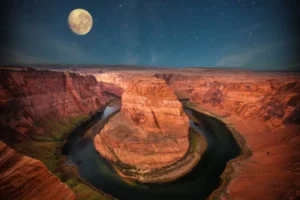
The Moon has fascinated humanity for thousands of years, serving as a guide for navigation, a symbol in mythology, and an endless source of artistic inspiration. In recent years, it has also become a favorite subject for travelers and photographers. With the rise of astrotourism and social media, capturing the perfect moonrise or moonset has turned into a goal for many adventurers who want to blend natural beauty with cosmic wonder.
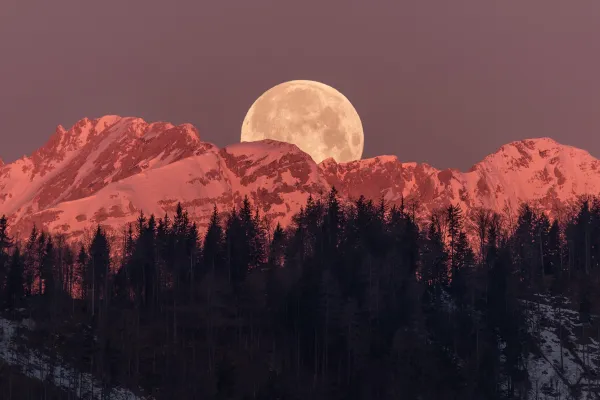
But why focus on the Moon’s rise and set rather than photographing it when it is high in the sky? The answer lies in perspective and atmosphere. During moonrise and moonset, the Moon is closer to the horizon, which makes it appear larger and more dramatic. The surrounding colors—soft pinks, fiery oranges, or deep purples—add an emotional touch to images. These moments also allow photographers to frame the Moon alongside iconic landscapes, mountains, oceans, or even city skylines, creating photos that are both artistic and memorable.
Unlike deep-sky astrophotography, which often requires advanced gear and dark-sky conditions, moon photography is accessible to everyone. A good camera, a tripod, and careful planning are often enough to capture stunning results. What truly makes the difference is location: some places on Earth simply elevate the experience, offering breathtaking backdrops that transform the Moon into the star of the composition.
In this article, we will explore the top destinations for moonrise and moonset photography. From mountain peaks in Japan and Switzerland to coastal escapes in Greece and Portugal, from bustling cities like New York and Dubai to remote islands under pristine skies, these destinations prove that the Moon is a universal subject that connects us all. Wherever you travel, the Moon will rise and set—but in certain places, it will do so with unforgettable grandeur.
Why Photographing the Moonrise and Moonset Is Special
For many travelers and photographers, the Moon is more than just a celestial body—it is a powerful symbol of beauty, rhythm, and connection. While the full Moon high in the sky is impressive, the moments of moonrise and moonset are uniquely captivating. These transitions not only create dramatic colors but also offer the best opportunities for framing the Moon in context with landscapes, architecture, and natural horizons.
One reason these moments are so special is the optical illusion known as the “Moon illusion.” When the Moon is close to the horizon, it appears much larger than when it is higher in the sky. This creates a sense of awe and allows photographers to capture images where the Moon seems gigantic next to mountains, forests, or city skylines.
Another factor is the atmospheric conditions near the horizon. As the Moon rises or sets, its light passes through more of Earth’s atmosphere, scattering shorter wavelengths and producing warm tones—reds, oranges, and purples—that enrich the scene. These colors, combined with the gradual fading of daylight or the arrival of night, create compositions full of mood and emotion.
Finally, moonrise and moonset photography is about storytelling. Unlike abstract shots of the Moon alone, these moments allow for creative compositions that connect the lunar body with Earth’s features. A temple crowned by the rising Moon, a cliff glowing as the Moon sets, or reflections of moonlight on the sea all tell stories that transcend astronomy and become works of art.
For both beginners and professionals, moonrise and moonset are opportunities not just to capture a photo, but to capture a feeling—moments that remind us of the beauty of cycles and the connection between our planet and its natural satellite.
Best Mountain Locations for Moon Photography
Mountains provide some of the most spectacular backdrops for moonrise and moonset photography. Their dramatic silhouettes, high elevations, and unobstructed horizons make them ideal for capturing the Moon as it emerges or disappears in the sky. For adventurous travelers, these landscapes turn lunar photography into a breathtaking experience.
One of the most iconic destinations is Mount Fuji in Japan. Its perfectly symmetrical cone, often snow-capped, creates an extraordinary frame for the rising or setting Moon. Japanese photographers have long celebrated these alignments, which symbolize harmony between Earth and sky. Planning tools and local photography guides often highlight the best times of year to capture the Moon exactly above Fuji’s summit.
In Europe, the Matterhorn in Switzerland is another legendary location. With its jagged peak piercing the sky, the mountain provides a dramatic stage for the Moon’s passage. During winter, when the air is crisp and clear, photographers can capture sharp contrasts between the icy mountain and the glowing lunar disk.
Across the Atlantic, the Rocky Mountains in the United States offer countless opportunities. Locations such as Colorado’s Maroon Bells or Wyoming’s Grand Teton National Park provide pristine conditions, with rugged peaks rising against luminous skies. The thin air at higher elevations reduces atmospheric distortion, making the Moon appear especially vivid.
Mountains add scale and grandeur to moon photography. They not only enhance the sense of size created by the Moon illusion but also infuse images with an adventurous spirit. Standing on a mountain trail at dusk or dawn, waiting for the Moon to appear, transforms the act of photography into an intimate encounter with nature.
For travelers seeking both beauty and challenge, mountain destinations combine the thrill of exploration with the magic of lunar spectacle, producing images that feel timeless and awe-inspiring.
Coastal Destinations with Stunning Moon Views
Few settings rival the coastline when it comes to moonrise and moonset photography. The combination of open horizons, reflective waters, and dramatic cliffs or beaches provides photographers with endless creative possibilities. The Moon rising over the ocean or setting into the waves creates images that are both powerful and serene.
One of the most famous coastal destinations is Santorini, Greece. With its whitewashed houses perched on cliffs and views stretching across the Aegean Sea, Santorini offers breathtaking backdrops for the rising Moon. Photographers often capture the Moon framed by iconic blue-domed churches, blending culture and cosmic wonder in a single shot.
In the United States, Big Sur, California is a dream for coastal moon photography. Its rugged cliffs drop into the Pacific Ocean, and the unobstructed western horizon makes for spectacular moonsets. Combined with crashing waves and coastal fog, the scene often feels mystical and cinematic.
Europe also boasts hidden gems like the Algarve in Portugal, where limestone cliffs and golden beaches create perfect vantage points for the Moon’s reflection on the Atlantic. During summer, warm evenings and calm seas make it especially inviting for travelers combining vacation with photography.
Coastal photography benefits from the reflection effect—when the Moonlight glimmers across the surface of the water, creating shimmering pathways that lead the eye into the horizon. This effect not only enhances compositions but also emphasizes the emotional quality of lunar images.
Whether it’s a tranquil beach or a dramatic cliffside, coastal destinations capture the Moon in ways that highlight both its celestial beauty and its connection to Earth’s oceans. For many, photographing the Moon over water creates some of the most poetic images possible.
Urban Skylines and Moon Magic
While remote landscapes offer purity and solitude, cities can provide equally magical opportunities for moonrise and moonset photography. When the Moon aligns with iconic architecture or glows above illuminated skylines, the contrast between natural wonder and human creation produces unforgettable images.
One of the most celebrated locations is New York City. Twice a year, during the phenomenon known as “Manhattanhenge,” the Moon and Sun align with the city’s grid, creating spectacular photographic opportunities. Capturing the Moon rising between skyscrapers like the Empire State Building or One World Trade Center is a favorite challenge for photographers worldwide.
In Europe, Paris, France offers romantic lunar views. The Moon rising above the Eiffel Tower or setting behind Sacré-Cœur Basilica transforms already iconic landmarks into cosmic compositions. The city’s architecture adds scale and symbolism, making the Moon feel like a natural crown above its skyline.
The Middle East also provides dramatic urban backdrops. In Dubai, UAE, the futuristic skyline becomes even more surreal when the Moon rises beside the Burj Khalifa, the tallest building in the world. The juxtaposition of celestial and architectural heights creates images that symbolize ambition and wonder.
Urban photography requires careful planning, as city lights and pollution can sometimes obscure the view. However, when the timing and alignment are right, cities reveal a different side of the Moon—one that connects astronomy with culture, art, and human achievement.
For travelers who love both modern landscapes and celestial beauty, photographing the Moon in urban settings offers a chance to see familiar skylines transformed. In these moments, the Moon reminds us that no matter how advanced our cities become, we remain connected to the cycles of nature and the sky above.
Remote and Dark-Sky Destinations
For photographers seeking the purest and most dramatic lunar views, remote islands and dark-sky reserves provide unmatched opportunities. Far removed from urban glow, these destinations offer pristine horizons and complete immersion in the natural world. Photographing the Moon in such places is not just about capturing an image—it is about experiencing the profound stillness that only remote landscapes can provide.
One standout destination is La Palma in the Canary Islands, Spain. Recognized as a Starlight Reserve, it enforces strict light pollution laws, ensuring that the skies remain exceptionally dark. When the Moon rises or sets over the volcanic landscape, the result is both dramatic and otherworldly.
In the South Pacific, Easter Island (Chile) offers a unique combination of cultural heritage and celestial wonder. The sight of the Moon rising behind the enigmatic Moai statues creates a connection between ancient human history and the timeless rhythms of the cosmos.
The Sahara Desert (Morocco) is another extraordinary location. Its vast, uninterrupted horizons make it perfect for capturing the Moon as it glows above sand dunes. The silence of the desert enhances the sense of awe, turning each photograph into a memory etched with emotion.
Remote and dark-sky destinations demand effort to reach, but the reward is unparalleled. Without artificial light interfering, the Moon glows brighter, its details sharper, and its presence more commanding. For photographers, these locations provide the chance to craft images that reflect both the immensity of the sky and the intimacy of Earth’s most isolated landscapes.
Tips for Moonrise and Moonset Photography
Capturing stunning images of the Moon requires more than just pointing a camera at the sky. With the right preparation and techniques, even beginners can create photographs that look professional and artistic.
The first tip is to plan ahead. Use apps like PhotoPills, Stellarium, or The Photographer’s Ephemeris to predict the exact times and alignments of moonrise and moonset. These tools also help you position yourself so that the Moon aligns perfectly with a mountain peak, a skyline, or the ocean.
Equipment matters, but it doesn’t have to be overly complex. A camera with manual settings, a telephoto or zoom lens (200mm or more for close shots, wide-angle for landscapes), and a sturdy tripod are essential. A remote shutter release or timer minimizes vibrations during long exposures.
Composition is key. Including foreground elements—such as temples, cliffs, or city monuments—adds depth and storytelling to your image. The Moon alone is beautiful, but when placed in context with Earthly features, it becomes extraordinary.
Timing is also important. Photographing the Moon just before it rises or sets captures it in softer light, with colorful skies that enrich the scene. As it climbs higher, the light becomes harsher, so the magic is often in those first few minutes above the horizon.
Finally, practice patience and flexibility. Weather conditions may not always cooperate, and sometimes clouds can hide the view. But these same clouds can also create dramatic effects, diffusing light or adding texture to the sky.
With preparation, the right gear, and a bit of creativity, moonrise and moonset photography can produce some of the most breathtaking images in astrotourism—photos that capture not just the Moon, but the experience of witnessing it in harmony with the Earth.
Conclusion
Moonrise and moonset are among the most enchanting natural spectacles, offering photographers and travelers moments where the ordinary becomes extraordinary. Unlike the Moon high in the sky, these transitions combine scale, color, and context, producing images that are not only visually stunning but also emotionally resonant. From mountains and coastlines to skylines and remote islands, each destination adds its own character to the lunar display, making the Moon a universal subject with endless possibilities.
What makes moonrise and moonset photography so special is the way it connects Earth and sky. A rising Moon above Mount Fuji speaks of harmony between nature and culture. Its reflection on the waters of Santorini evokes tranquility and romance. When it glows between New York skyscrapers or behind Parisian landmarks, it reminds us that even in modern cities, the cosmos continues its timeless rhythm. And in deserts or remote islands, where silence and darkness reign, the Moon becomes a beacon of wonder in its purest form.
For travelers, seeking out these destinations is more than a photography project—it is a journey into awe. Planning a trip to capture the Moon challenges us to slow down, wait, and appreciate cycles that have guided humanity for millennia. Each photograph becomes not just a record of light, but a memory of the place, the moment, and the feeling of standing under the sky.
Ultimately, the Moon belongs to everyone, yet some places allow us to see it in unforgettable ways. Whether you are a beginner with a smartphone or an experienced astrophotographer with advanced gear, the Moon will always offer new opportunities to explore, frame, and admire.
✨ Wherever your journey takes you, the Moon will rise and set—but in the right place, it will leave you with a story written in light.