In recent years, astrotourism has emerged as one of the most captivating forms of cultural travel. While many travelers are drawn to the night sky for its scientific and natural beauty, there is also a powerful spiritual dimension to this experience. For millennia, people across the world have looked upward and found not only constellations and cosmic rhythms but also signs of faith, destiny, and divine presence.
The stars have long served as bridges between the earthly and the sacred. Ancient civilizations aligned temples with solstices and star risings, Indigenous cultures read the Milky Way as a river of ancestors, and world religions embedded celestial symbols into their most cherished stories. Today, as travelers seek meaning beyond traditional sightseeing, astrotourism offers an opportunity to combine wonder with reflection. Visiting sacred sites aligned with the sky or participating in festivals that celebrate celestial events connects us with traditions that stretch back thousands of years.
This article explores how cultures past and present link spirituality with the night sky. From Mesopotamian priests to modern dark-sky festivals, from pyramids to pilgrimages, the heavens have always been more than a spectacle of light—they are a canvas of faith. Understanding this connection helps us see astrotourism not only as a way to admire the cosmos but also as a journey into humanity’s shared search for meaning.
Ancient Civilizations and Sacred Skies
The earliest civilizations turned to the stars for both guidance and worship. In Mesopotamia, priests meticulously recorded celestial movements, interpreting them as messages from the gods. Eclipses, planetary alignments, and the zodiac were seen as divine scripts that shaped the fate of kings and empires. Watching the heavens was not just a scientific pursuit—it was a sacred duty.
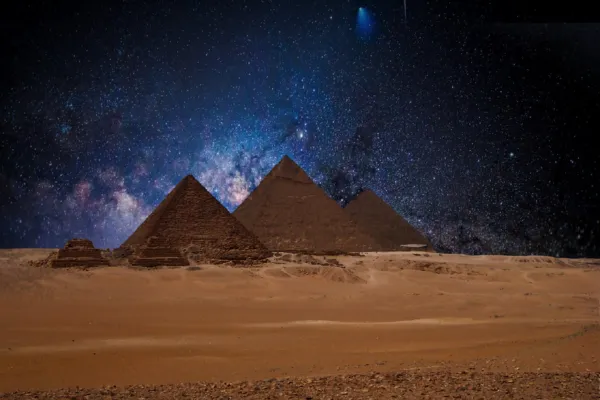
In Egypt, the connection between stars and spirituality was equally profound. The heliacal rising of Sirius signaled the flooding of the Nile, a vital moment for survival, but it also symbolized the goddess Isis and the rebirth of Osiris. Pyramids and temples were aligned with Orion and other constellations, reinforcing the belief that rulers would ascend to join the gods among the stars.
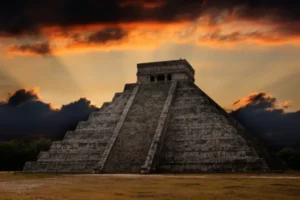
Across the Atlantic, the Maya and Inca also treated the heavens as sacred calendars. The Maya built observatories to track Venus, which played a central role in their rituals of war and sacrifice. At Chichén Itzá, the equinox serpent shadow was not only an astronomical event but also a sacred manifestation of the feathered serpent god Kukulcán. The Inca saw the Milky Way as a celestial river connected to the sacred waters of Earth, and their festivals synchronized human life with cosmic cycles.
For these civilizations, the stars were more than practical guides. They were sacred texts, written across the sky, blending timekeeping with theology.
Sacred Sites Aligned with the Cosmos
Some of the world’s most iconic monuments were built as living connections between earth and sky. Stonehenge in the United Kingdom, for example, aligns with the solstices, allowing the midsummer sunrise and midwinter sunset to frame its stones. These alignments suggest that gatherings there were both astronomical observations and spiritual ceremonies, honoring the cycles of light and darkness.
In Mesoamerica, Chichén Itzá in Mexico stands as one of the clearest examples of celestial design. During the spring and autumn equinoxes, sunlight creates the illusion of a serpent slithering down the Pyramid of Kukulcán. This breathtaking spectacle symbolized the descent of a deity, transforming a solar event into a sacred ritual.
Further east, Angkor Wat in Cambodia demonstrates how cosmic harmony was embedded into architecture. Built in alignment with equinox sunrises, its design reflects Hindu cosmology, with the central towers representing Mount Meru, the axis of the universe. Visitors who witness the equinox sunrise at Angkor Wat today are experiencing the same union of faith and astronomy that guided its builders centuries ago.
These sacred sites show that architecture was never neutral—it was a cosmic tool. By aligning structures with celestial bodies, cultures created spaces where ritual, power, and the universe converged. For modern astrotourists, visiting these sites offers a way to step into the ancient dialogue between humanity and the stars, experiencing how faith and astronomy were once inseparable.
Stars in Religious Traditions
The stars are not only central to ancient mythologies but also deeply woven into the world’s major religions. In Christianity, one of the most iconic celestial symbols is the Star of Bethlehem, which guided the Magi to the birthplace of Jesus. This star represents divine guidance, a heavenly sign that connects faith with the sky. Throughout Christian history, stars have often symbolized light, hope, and eternal life, appearing in hymns, art, and architecture.
In Islam, the night sky also carries profound meaning. The lunar calendar governs religious rituals such as Ramadan, and the sighting of the crescent moon determines sacred time. The Qur’an makes frequent references to stars as both signs of God’s creation and guides for travelers in the desert. Their presence in the text underscores the idea that the cosmos is a reflection of divine order.
Judaism too incorporates celestial imagery. The covenant with Abraham, where God promises descendants as numerous as the stars, frames the heavens as a symbol of faith and continuity. Stars in this tradition signify both abundance and divine promise.
Eastern religions often integrate astrology and celestial symbolism directly into spiritual practice. In Hinduism, astrology (Jyotish) is considered a sacred science, linking human life with planetary and stellar movements. Buddhism, while more symbolic in its approach, often portrays stars as reminders of impermanence and enlightenment.
For Indigenous cultures worldwide, stars are living beings—ancestors, spirits, and guides. In Australia, the Aboriginal “Emu in the Sky” is tied to creation stories, while in North America, many Native traditions see constellations as ancestral spirits watching over the living.
Together, these examples show that the stars have always been more than distant lights. They are spiritual markers, connecting human faith with the immensity of the universe.
Modern Astrotourism with Spiritual Roots
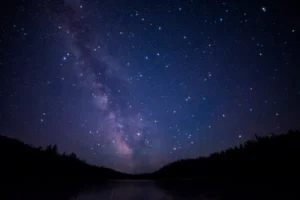
Today’s growing interest in astrotourism is not just about admiring constellations—it often carries a spiritual dimension that echoes ancient traditions. Travelers visit dark-sky reserves and observatories not only for scientific wonder but also for a sense of awe and transcendence. For many, standing beneath a sky unspoiled by artificial light feels like a sacred experience, a chance to reconnect with something larger than oneself.
Modern festivals often blend astronomy with ritual. In places like the United Kingdom, people still gather at Stonehenge during solstices, celebrating the same celestial alignments that inspired ancient communities. In Asia, lantern festivals timed with lunar cycles combine communal joy with spiritual reflection. Even contemporary dark-sky events in the United States or Europe often include music, storytelling, or meditation, recognizing that stargazing is as much about the soul as about science.
Pilgrimages also play a role. Tourists travel to sites such as Chichén Itzá or Angkor Wat not only to marvel at architecture but to witness celestial events that carry spiritual weight. Experiencing the equinox serpent shadow or the sunrise over sacred towers allows visitors to feel part of a timeless dialogue between humanity and the cosmos.
In this way, modern astrotourism revives ancient practices, transforming the act of looking at the stars into both an educational and spiritual journey. It shows that while our tools have advanced, our longing for meaning under the night sky remains unchanged.
The Blending of Science and Faith in the Sky
One of the most fascinating aspects of astrotourism is its ability to unite science and spirituality. On one hand, astronomy provides the technical knowledge to explain celestial phenomena—solstices, eclipses, planetary alignments. On the other, spirituality gives these events symbolic meaning, turning them into moments of reflection, renewal, or connection with the divine. Together, they create experiences that satisfy both curiosity and wonder.
Travelers often report a sense of transformation when stargazing in pristine dark-sky locations. The sheer scale of the cosmos evokes humility, reminding us of our small place in the universe. For some, this realization is deeply spiritual; for others, it is a scientific perspective that inspires reverence. Either way, the result is a profound emotional response that bridges belief systems.
Cultural traditions demonstrate this blending. A solstice festival might be both a precise astronomical event and a spiritual ritual of rebirth. A dark-sky reserve visit may include telescope observations alongside meditation under the stars. In these moments, the boundary between science and faith fades, replaced by a shared sense of connection to the cosmos.
Astrotourism thrives because it appeals to both sides of human nature: the rational desire to understand and the spiritual longing to belong. By looking at the stars, we engage not only with physics and history but also with stories, myths, and inner reflection. It is this dual quality—scientific and sacred—that makes the night sky one of humanity’s most enduring sources of inspiration.
Conclusion
Looking at the stars has never been just about astronomy. For thousands of years, cultures around the world have connected the heavens with meaning, faith, and identity. From Mesopotamian priests reading omens in the skies to the builders of Chichén Itzá aligning temples with equinoxes, humanity has consistently sought to bridge the earthly and the cosmic. Spiritual traditions in Christianity, Islam, Hinduism, Buddhism, Judaism, and Indigenous beliefs all reflect this timeless dialogue, turning the night sky into a sacred text as much as a scientific one.
Modern astrotourism revives this ancient connection. Travelers today flock to sacred sites, solstice festivals, and dark-sky reserves not only to admire the beauty of the cosmos but also to reflect, meditate, and rediscover humanity’s shared place in the universe. These experiences blend education and awe: telescopes may reveal the rings of Saturn, while cultural rituals remind us of the symbolic power of celestial cycles. In that blending, science and faith are not in conflict—they complement each other, offering a fuller experience of wonder.
What makes this union so powerful is its universality. No matter where we are, we all look up at the same sky. The stars are both personal and collective: they inspire individual reflection while also serving as cultural anchors that connect us to ancestors, myths, and communities.
Astrotourism, then, is more than a trend. It is a continuation of humanity’s oldest practice: finding meaning in the stars. By engaging with both the scientific and spiritual dimensions of the night sky, modern travelers step into a tradition as old as civilization itself—one that shows us that the cosmos is not only above us but also within us, guiding our search for connection, wonder, and belonging.