Astrophotography has become one of the most captivating ways to combine travel, technology, and creativity. More than just taking pictures, it is about capturing the timeless beauty of the night sky and framing it against some of the planet’s most dramatic landscapes. For photographers—whether seasoned professionals or passionate beginners—the thrill lies in finding locations where the heavens truly come alive.
Some of the best astrophotography happens in unexpected places, far from city lights and tourist crowds. Deserts, high mountain plateaus, and remote nature reserves often provide the clearest skies and most striking foregrounds. Shooting the Milky Way rising above a canyon, the Southern Cross shimmering over dunes, or meteor showers reflecting in salt flats can transform a simple photograph into a breathtaking story of Earth and cosmos together.
This article explores exotic destinations for astrophotography, stretching across continents and hemispheres. From the rugged deserts of Texas, where dark-sky parks preserve some of North America’s most impressive views, to the vast open spaces of Namibia, where the skies are among the darkest in the world, these places are perfect for anyone chasing cosmic beauty. Along the way, we’ll also highlight sites in South America, the Asia-Pacific, and beyond, where culture, wilderness, and astronomy converge.
Astrophotography is more than a hobby; it is an invitation to slow down, look up, and connect with something greater. Each image becomes a memory of not just where you were, but also how the universe looked at that precise moment in time. So whether you dream of capturing star trails in the American Southwest or the Milky Way arcing over the Namib Desert, these destinations offer unforgettable opportunities to let your camera—and your imagination—wander among the stars.
The American Southwest: Texas and Beyond
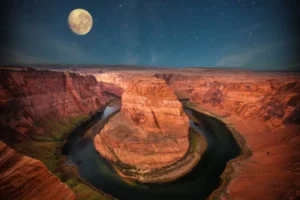
The American Southwest is a paradise for astrophotographers, offering vast desert landscapes, rugged mountains, and some of the darkest skies in North America. Texas, in particular, has become a rising star in the world of dark-sky tourism. The crown jewel is Big Bend National Park, one of the least light-polluted places in the United States. Here, the Milky Way stretches across the horizon in such detail that it often leaves first-time visitors speechless. The park’s dramatic canyons, winding rivers, and jagged cliffs make the perfect foreground for capturing star trails or time-lapse sequences.
Another highlight in Texas is the McDonald Observatory, located near Fort Davis. Not only is it a world-class research facility, but it also hosts public star parties where visitors can photograph planets, nebulae, and galaxies through powerful telescopes. This combination of professional science and amateur passion makes it a unique experience for photographers.
Beyond Texas, the wider Southwest provides equally striking opportunities. The deserts of Arizona and New Mexico are famous for their clear, dry skies, while Utah’s national parks—such as Arches and Canyonlands—offer surreal rock formations that frame the stars like natural cathedrals. Each location combines stunning geological features with celestial clarity, creating images that are as much about Earth as they are about the cosmos.
For astrophotographers, the American Southwest is not just a destination—it is a canvas. Its landscapes, paired with some of the clearest skies on the continent, invite travelers to capture unforgettable portraits of the universe.
South America’s Hidden Skies
If the American Southwest is iconic for astrophotography, South America offers a more exotic and often less crowded alternative. The continent is home to some of the clearest skies in the world, thanks to its high-altitude deserts, remote wilderness areas, and unique natural backdrops.
The most famous destination is the Atacama Desert in Chile, often described as the best place on Earth for stargazing. With over 300 clear nights per year and virtually no humidity, the Atacama allows photographers to capture razor-sharp images of the Milky Way, star clusters, and even distant galaxies. Its surreal landscapes—salt flats, volcanic peaks, and alien-like rock formations—add dramatic elements to every composition.
Further east, the Argentine Andes offer equally impressive opportunities. Regions like San Juan and Mendoza not only provide clear skies but also spectacular mountain scenery that frames the stars beautifully. Photographers often combine their astrophotography trips with cultural experiences, such as wine tastings or exploring traditional Andean villages.
In Bolivia, the Salar de Uyuni becomes a dreamlike mirror during the rainy season, reflecting the night sky in perfect symmetry. Shooting the Milky Way here creates the surreal effect of standing inside a cosmic sphere. Brazil also contributes with hidden gems, including remote parks in the northeast where the Southern Cross and Magellanic Clouds dominate the heavens.
South America’s hidden skies are more than just technically perfect—they are emotionally powerful. Each location offers a blend of pristine darkness, breathtaking landscapes, and cultural richness, making astrophotography here an unforgettable adventure.
Africa’s Celestial Treasures: Namibia
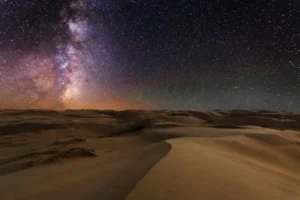
When it comes to dark skies, Namibia is in a class of its own. With one of the lowest population densities on the planet and vast stretches of desert wilderness, this southern African nation has become a premier destination for astrophotographers seeking pristine conditions. The NamibRand Nature Reserve, a certified International Dark Sky Reserve, is often described as one of the darkest places on Earth. Here, the Milky Way glows so intensely that it casts shadows across the desert sands.
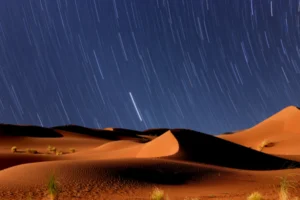
What makes Namibia so extraordinary is the combination of natural landscapes and celestial clarity. The red dunes of Sossusvlei, twisted quiver trees in Keetmanshoop, and rugged mountain ranges all serve as dramatic backdrops for astrophotography. At night, these features appear almost surreal under the glow of countless stars. For photographers, Namibia offers endless opportunities to create compositions that feel both alien and deeply rooted in Earth’s natural beauty.
Many lodges and camps in the region cater specifically to stargazers, offering telescopes, guided astronomy tours, and platforms designed for astrophotography. Visitors can capture everything from wide-field shots of the Milky Way to close-ups of deep-sky objects. The dry climate, high elevation, and minimal atmospheric distortion provide near-perfect conditions year-round.
In Namibia, astrophotography is more than a technical pursuit—it is an immersion into silence and vastness. Standing in the desert, surrounded by timeless landscapes and skies alive with stars, photographers often describe a sense of awe that transcends the image itself. It is a reminder that the Earth’s wildest places still hold the clearest windows into the universe.
Asia-Pacific Wonders
The Asia-Pacific region offers some of the most spectacular and diverse locations for astrophotography, combining exotic landscapes with access to the southern skies. Among the highlights is Australia’s Outback, where places like Uluru and Western Australia’s dark-sky reserves provide unparalleled visibility. The dry climate and minimal population density create ideal conditions, and the unique rock formations serve as striking foregrounds for Milky Way compositions.
Equally impressive is New Zealand’s Aoraki Mackenzie Dark Sky Reserve, one of the largest and most recognized in the world. Here, photographers can capture breathtaking views of the Magellanic Clouds, the Southern Cross, and dense clusters of stars rarely visible from northern latitudes. The combination of snow-capped peaks, turquoise lakes, and starry skies makes it one of the most photogenic astrophotography destinations on Earth.
Other parts of Asia also contribute to this cosmic portfolio. Remote regions of Mongolia, for example, offer vast steppe landscapes under incredibly dark skies, while volcanic islands in Indonesia provide dramatic silhouettes against star-filled horizons. In Japan, innovative observatories and astro-villages make astrophotography accessible even in a nation known for its dense urban life.
What unites these destinations is their ability to pair stunning terrestrial beauty with cosmic wonder. In the Asia-Pacific, the night sky is not an isolated phenomenon but part of a larger natural and cultural landscape. For astrophotographers, this means opportunities not just to capture stars but to frame them within some of the world’s most iconic settings—images that tell a story of both Earth and sky.
Tips for Astrophotographers
Capturing the night sky in exotic destinations requires more than just enthusiasm—it calls for preparation, the right gear, and a thoughtful approach. For those seeking to photograph the Milky Way, star trails, or meteor showers, timing and planning are just as important as location.
The first key factor is season and moon phase. Astrophotographers should aim for the new moon or nights when the moon is below the horizon to maximize darkness. In the Southern Hemisphere, the core of the Milky Way is most visible from March to October, while in the Northern Hemisphere it is best from April to September. Meteor showers, eclipses, and planetary alignments can add extra drama to an expedition, so checking astronomical calendars in advance is essential.
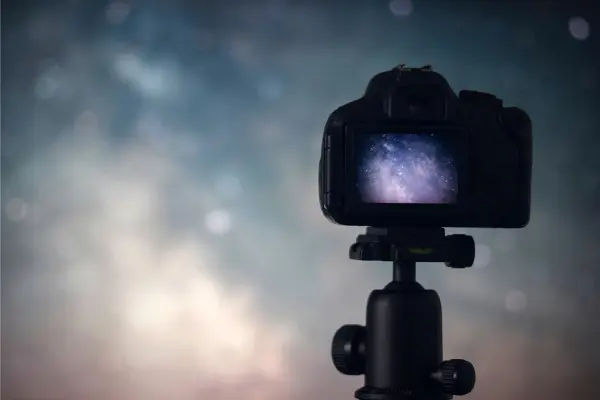
When it comes to gear, a sturdy tripod, a wide-angle lens with a fast aperture (f/2.8 or lower), and a camera capable of manual settings are must-haves. Remote shutter releases or intervalometers help avoid vibration during long exposures. For advanced photographers, star trackers allow for longer exposures of deep-sky objects without trails. Extra batteries are crucial, as cold desert or mountain nights can drain power quickly.
Safety and comfort also matter. Exotic astrophotography destinations are often remote, so carrying water, warm clothing, and navigation tools is vital. Traveling with local guides not only ensures safety but also provides insight into the cultural and natural context of the site.
Finally, patience is the secret ingredient. Great astrophotography often requires hours of waiting in silence, but the reward—a perfect shot of the universe framed by Earth’s most dramatic landscapes—makes every moment worthwhile.
Conclusion
Astrophotography is more than a technical pursuit; it is a journey that blends exploration, creativity, and cosmic wonder. From the deserts of Texas to the surreal salt flats of Bolivia, from the towering peaks of the Argentine Andes to the vast red dunes of Namibia, each destination reveals the universe in a way that is unique, exotic, and unforgettable.
What unites these locations is their ability to showcase the sky not as an isolated backdrop but as part of a living landscape. In the Atacama Desert, the Milky Way glows above volcanic peaks; in Namibia, it casts shadows across the sand; in Australia and New Zealand, the Southern Hemisphere skies reveal constellations invisible elsewhere. Each place offers a chance to tell a story where Earth and cosmos meet.
For photographers, these journeys are about more than capturing images—they are about capturing perspective. Standing under pristine skies reminds us of our smallness and our connection to something infinitely greater. The photos we take are not just records of stars, but of the silence, the landscapes, and the emotions of the moment.
Astrophotography invites us to slow down, look deeper, and see beauty in both the vast and the minute. Whether you are planning a trip to a dark-sky reserve or dreaming of distant deserts, the universe is always waiting to be framed.
✨ From Texas to Namibia, the stars are calling—pack your camera and let the cosmos be your canvas.