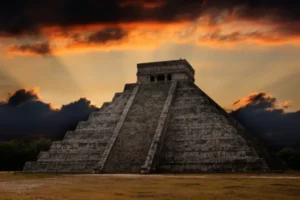

When we think of ancient monuments, we often admire their size, beauty, and durability. Yet many of these structures were not designed only to impress onlookers or house rulers and gods. Hidden within their stones lies a deeper purpose: they were carefully aligned with the movements of the sky. Across continents and cultures, civilizations built temples, pyramids, and megaliths that mirrored celestial rhythms, transforming architecture into a dialogue with the cosmos.
This alignment was rarely accidental. By observing the sun’s rise at solstices, the phases of the moon, or the annual reappearance of stars like Sirius, ancient builders created monuments that acted as calendars, compasses, and spiritual gateways. These structures marked the passage of time, ensured agricultural cycles, and provided sacred spaces where humans could connect with divine forces. In many cases, their precise orientations reveal an astonishing understanding of astronomy, achieved long before telescopes or modern instruments.
But celestial architecture was more than science—it was also about meaning and power. Kings, pharaohs, and emperors used these cosmic alignments to legitimize their rule, presenting themselves as chosen figures who governed in harmony with the universe. Communities gathered at these monuments for rituals tied to the heavens, reinforcing both social identity and spiritual belief.
From Mesopotamian ziggurats to the pyramids of Egypt, from Stonehenge to Angkor Wat, each culture expressed a universal impulse: to inscribe the order of the heavens into the fabric of the earth. In this article, we will explore how architecture became a bridge between sky and stone, revealing the ingenuity, spirituality, and vision of civilizations that saw no boundary between the cosmos and human life.
Mesopotamia and the Ziggurats
Mesopotamia, often called the “cradle of civilization,” was also a birthplace of cosmic architecture. Towering ziggurats, built between 2100 and 500 BCE, were designed as man-made mountains that connected heaven and earth. These massive stepped structures rose above city landscapes, serving both as temples for gods and as symbols of the city-state’s power.
While primarily religious, ziggurats also had strong astronomical associations. Many were oriented with the cardinal directions, reflecting the importance of cosmic order in Mesopotamian belief. The Babylonians, who developed one of the earliest zodiac systems, employed priest-astronomers to observe the skies from these elevated platforms. Their role was to interpret celestial signs as messages from the gods, blending architecture, astronomy, and divination into a single cultural practice.
The most famous example, the Ziggurat of Ur, is thought to have been aligned with the paths of celestial bodies, embodying the link between the divine realm and the earthly domain of the king. For Mesopotamians, building in alignment with the sky was a way of maintaining balance between humans and gods, ensuring prosperity and order.
Egypt: Pyramids and Temples of the Stars
Few civilizations expressed cosmic order through architecture as dramatically as ancient Egypt. The pyramids of Giza are among the most studied examples of celestial alignment. Scholars believe that the three pyramids were positioned in correlation with Orion’s Belt, a constellation associated with Osiris, the god of the afterlife. This alignment symbolized the pharaoh’s journey into eternity, linking royal tombs directly with the stars.
In addition to pyramids, temples such as Karnak and Luxor were carefully oriented to solar events. At Karnak, for example, the temple’s main axis aligns with the rising sun during the winter solstice, flooding the sanctuary with light. These alignments were not decorative but deeply symbolic, demonstrating that the pharaohs ruled in harmony with cosmic cycles.
Stars also played a vital role in religious belief. The heliacal rising of Sirius marked the annual flooding of the Nile, a life-giving event for Egyptian agriculture. Temples and rituals were often synchronized with this celestial event, blending practical observation with spiritual significance.
For Egyptians, architecture was a cosmic tool: it guided agricultural life, reinforced royal authority, and connected the earthly realm with the divine heavens. By embedding cosmic patterns into stone, they ensured that their monuments would endure as eternal reflections of the stars above.
Europe: Stonehenge and Megalithic Structures
Europe is home to some of the most iconic examples of prehistoric architecture aligned with the cosmos. The most famous is Stonehenge in southern England, a vast circle of standing stones that dates back to around 3000–2000 BCE. Its layout reveals precise alignments with the solstices. On the summer solstice, the rising sun appears directly above the Heel Stone when viewed from the center, while the winter solstice sunset aligns with the axis of the monument. These events suggest that Stonehenge served as a ceremonial calendar, marking the turning points of the year and guiding agricultural and ritual cycles.
Beyond Stonehenge, other megalithic sites across Europe also display celestial orientation. Newgrange in Ireland, built around 3200 BCE, is a passage tomb aligned with the winter solstice sunrise. Once a year, sunlight enters through a narrow roof box, illuminating the inner chamber for a few minutes. This event not only honored the sun’s return but also symbolized rebirth and continuity. Similar alignments can be found in Carnac (France) and Callanish (Scotland), where stone rows and circles track solar and lunar cycles.
These monuments suggest that Europe’s ancient builders were skilled astronomers as well as architects. They created spaces where community gatherings merged practical timekeeping with spiritual reverence, embedding the rhythms of the cosmos into the heart of their societies.
The Americas: Maya, Aztec, and Inca Monuments
In the Americas, celestial alignment was central to monumental architecture. The Maya, known for their sophisticated astronomy, built pyramids that functioned as cosmic calendars. At Chichén Itzá, the Pyramid of Kukulcán produces the famous “serpent shadow” during the equinoxes, as sunlight creates the illusion of a snake descending the temple steps. This spectacle reflected the Maya’s deep integration of myth, astronomy, and architecture.
The Aztecs also incorporated celestial cycles into their temples. The Templo Mayor in Tenochtitlán was aligned with the rising sun during the equinox, symbolizing the balance between opposing cosmic forces. Rituals conducted there reinforced the Aztec belief that maintaining harmony with the cosmos required human participation, often through elaborate ceremonies and sacrifices.
In the Andes, the Inca constructed sites like Machu Picchu with precise solar and stellar orientations. The Intihuatana Stone, often referred to as a “hitching post of the sun,” was aligned with solstices, serving as a sacred tool for tracking celestial cycles. The Inca also observed the Milky Way and its dark constellations, integrating them into the design of their sacred sites.
For these civilizations, celestial architecture was a way of connecting human society to divine order. Monuments were not only political or religious centers but also cosmic instruments, embodying the balance between earth and sky.
Asia: Cosmic Harmony in Architecture
In Asia, celestial alignment played a profound role in temple and monument design, reflecting philosophies of harmony between humanity and the cosmos. One of the most striking examples is Angkor Wat in Cambodia. Built in the 12th century, the temple complex is aligned with the equinox sunrise, and its towers are thought to symbolize cosmic mountains. The design mirrors Hindu cosmology, where the universe is structured around Mount Meru, the axis of the world.
In India, temple architecture was guided by Vastu Shastra, an ancient system combining astronomy, geometry, and spirituality. Temples were often oriented toward cardinal points or celestial events, ensuring that worship and ritual were synchronized with cosmic rhythms. Solar temples, such as the Sun Temple at Konark, were built to capture and celebrate the path of the sun across the year.
Chinese imperial architecture also reflected celestial order. The Forbidden City in Beijing was designed according to cosmological principles, with its layout symbolizing the harmony between heaven and earth. The Temple of Heaven, used by emperors for annual rituals, was constructed with astronomical precision to ensure proper alignment with the heavens.
These Asian monuments illustrate how architecture was not merely functional or decorative but deeply philosophical. By aligning buildings with celestial patterns, rulers and communities sought to live in balance with the cosmos, reinforcing both spiritual beliefs and political authority.
Shared Meanings of Celestial Architecture
Although built by cultures separated by oceans and centuries, celestial monuments share striking similarities in meaning and purpose. One of the most universal functions was timekeeping. Whether it was Stonehenge tracking solstices, Egyptian temples aligned with Sirius, or Inca stones marking equinoxes, architecture often served as a giant calendar. These alignments allowed communities to anticipate seasonal changes, guiding agriculture and rituals.
Another shared theme is the link between the divine and earthly realms. Civilizations believed that aligning temples with the heavens ensured harmony between humans and gods. The ziggurats of Mesopotamia, the pyramids of Egypt, and Angkor Wat in Cambodia all embodied this principle: by building in tune with the cosmos, rulers demonstrated their legitimacy as intermediaries between heaven and earth.
Celestial architecture also reinforced social cohesion. Festivals tied to solstices or equinoxes brought communities together at these monuments, transforming them into centers of ritual and identity. Observing the heavens was not only a scientific act but also a communal one, strengthening bonds between people and embedding cultural memory into stone.
Finally, these structures reflect humanity’s enduring desire to inscribe cosmic order onto earthly life. They are physical manifestations of a belief shared across civilizations: that human existence is not isolated but part of a larger, harmonious universe.
Conclusion
Temples and monuments aligned with the cosmos reveal the profound ways ancient civilizations connected earth and sky. From Mesopotamian ziggurats to Egyptian pyramids, from Stonehenge to Chichén Itzá, and from Angkor Wat to the Forbidden City, architecture became more than construction—it became a cosmic statement. Each culture expressed, in its own way, the conviction that human life should mirror celestial rhythms.
These monuments served multiple roles: calendars for agriculture, stages for rituals, symbols of divine authority, and bridges between the physical and the spiritual. They demonstrate that astronomy, religion, and politics were once inseparable, unified through architecture. Even today, these sites inspire awe not only for their engineering brilliance but also for their ability to capture humanity’s timeless fascination with the cosmos.
In our modern world, where technology has given us telescopes that see to the edge of the universe, the legacy of celestial architecture remains relevant. These monuments remind us that connecting with the sky is not only about scientific discovery—it is also about cultural identity, spirituality, and imagination.
Ultimately, architecture aligned with the cosmos shows that across time and culture, humanity has always sought to find its place in the universe. The stones that still stand, pointing to the stars, tell us that this search for meaning is as enduring as the heavens themselves.